Gift of Severance A. Millikin · The Cleveland Museum of Art
Image: public domain (CC0) · Museum record & image source ↗
Northeast China, Neolithic period, probably Hongshan culture (4700–2920 BCE) · c. 4700–2920 BCE
Amulet in the Form of a Seated Figure with Bovine Head
Creator not recorded by the museum
- Date
- c. 4700–2920 BCE
- Medium
- jade (nephrite)
- Dimensions
- 14.6 x 6 x 4.1 cm (5 3/4 x 2 3/8 x 1 5/8 in.)
- Country / context
- China
- Movement / tradition
- East Asian arts
- Collection
- The Cleveland Museum of Art
- Pathway
- East Asian arts ↗
FROM THE MUSEUM
With a bovine head and four horns, this seated figurine was a powerful ritual and shamanic symbol. Drill holes above its shoulders form two interconnected perforations for suspension, suggesting that the jade was originally used as a pendant, presumably by the shaman performing the tasks of journeying to and communicating with the supernatural realms.
Collection text · The Cleveland Museum of Art · CC0A MOMENT TO LOOK
Start with what you can see: shapes, surface, colour and scale. How might the listed materials affect the way this object was made and experienced?
Looking prompt · an invitation to observe, not a historical interpretation.Follow a connection.
Explore the tradition ↗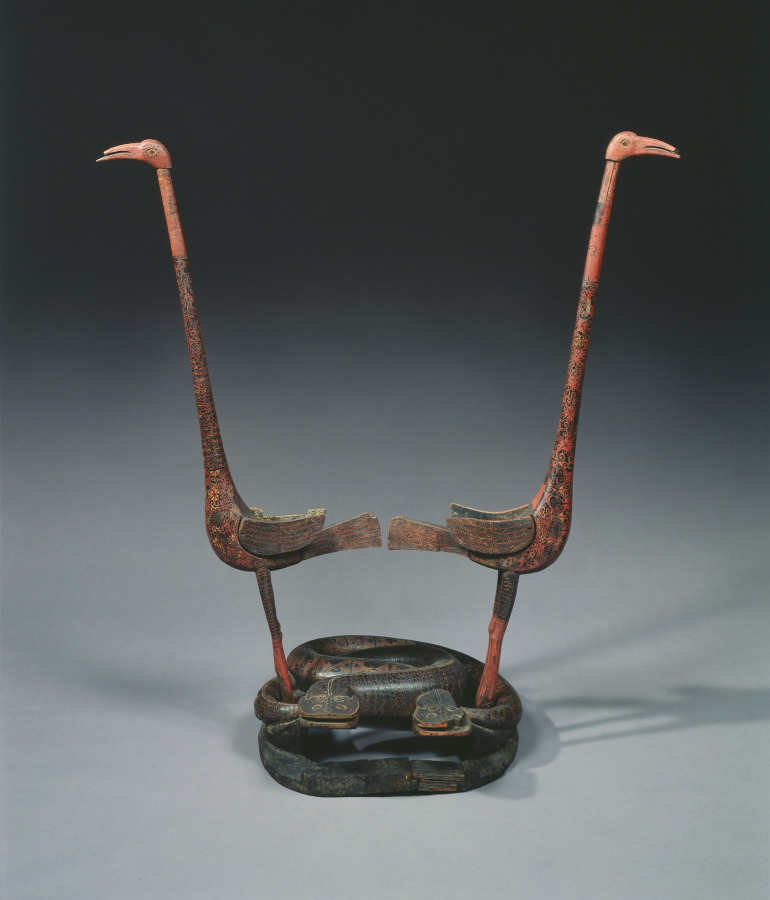 ↗
China, reportedly from Hunan province, Changsha, Warring States period (475–221 BCE), State of Chu (c. 1046–223 BCE) · 475–221 BCE
Cranes and Serpents
Creator not recorded
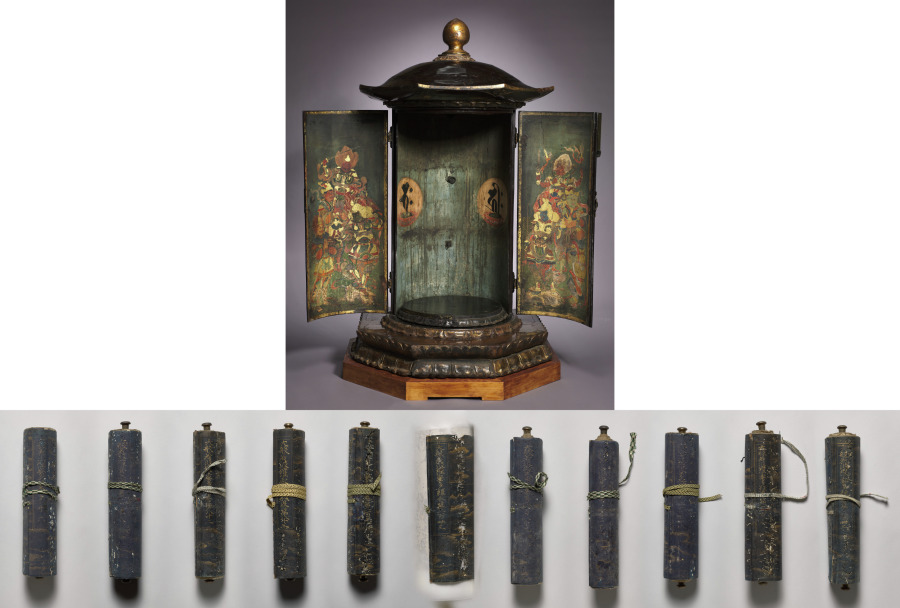 ↗
Japan, Heian period (794–1185) · late 1100s
Repository for the Great Perfection of Wisdom Sutra and Eleven Volumes of the Great Perfection of Wisdom Sutra
Creator not recorded
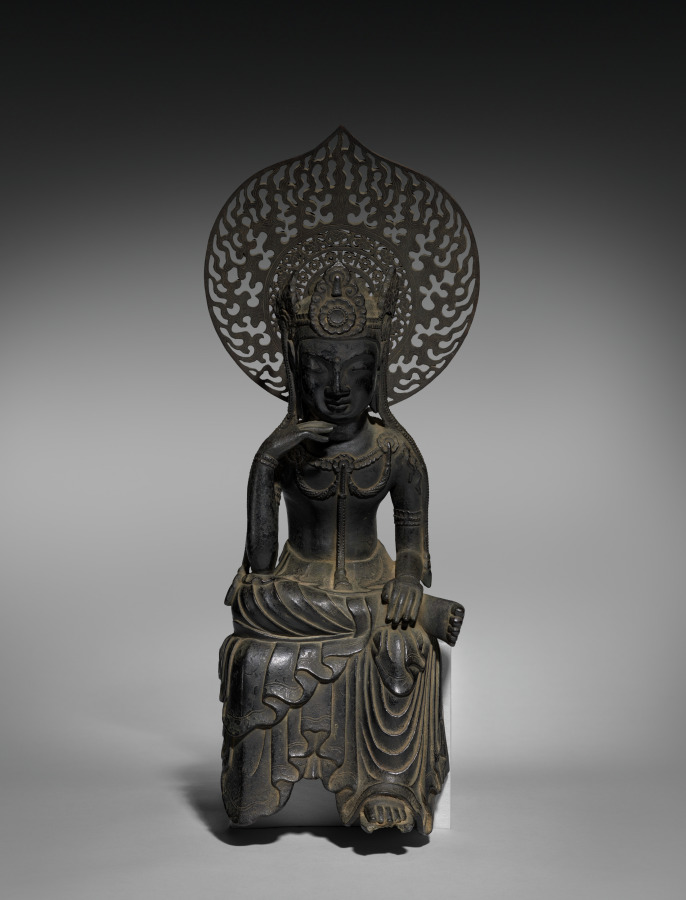 ↗
Japan, Asuka period (538–710) · late 600s
Buddha of the Future (Miroku Bosatsu)
Creator not recorded
 ↗
Korea, Goryeo dynasty (918–1392) · 1100s
Knife Sheath
Creator not recorded