John L. Severance Fund · The Cleveland Museum of Art
Image: public domain (CC0) · Museum record & image source ↗
Persian Verses: The Fortieth Year of King Kisra Nushirwan's Reign and the Story of Buzurgmihr (recto); Portrait of Nushirwan the Just (verso) from a Shahnama (Book of Kings) of Firdausi (940–1019 or 1025)
Creator not recorded by the museum
- Date
- 1330–35
- Medium
- opaque watercolor, ink, and gold on paper
- Dimensions
- Sheet: 59.3 x 40.2 cm (23 3/8 x 15 13/16 in.)
- Country / context
- Iran
- Movement / tradition
- Middle Eastern and North African arts
- Collection
- The Cleveland Museum of Art
- Pathway
- Middle Eastern and North African arts ↗
Mongol interest in the production of illustrated manuscripts eventually focused on Persian epic poetry. The Shahnama, a compilation of the epics and tales of Iran's legendary heroes, was a natural choice; the book included many subjects that suited Mongol taste, such as banquets, battles, hunting, and magical or fantastic events. Seated on the throne in the center of the painting is the Sasanian ruler of Iran, Khusraw I Anushirwan (531–579), descendant of Bahram Gur. Above the king's head an inscription reads, "Picture of Nushirwan the Just." The figure in the elaborate turban to the left of the king is probably the young Minister Buzurgmihr, famous for his wisdom and virtue. To celebrate the explanation of a troublesome dream by Buzurgmihr, Nushirwan held a series of seven banquets. The text around this painting describes the fifth banquet.
Collection text · The Cleveland Museum of Art · CC0Start with what you can see: shapes, surface, colour and scale. How might the listed materials affect the way this object was made and experienced?
Looking prompt · an invitation to observe, not a historical interpretation.Follow a connection.
Explore the tradition ↗ ↗
Cherry Blossoms in the Wind
Utagawa Toyokuni
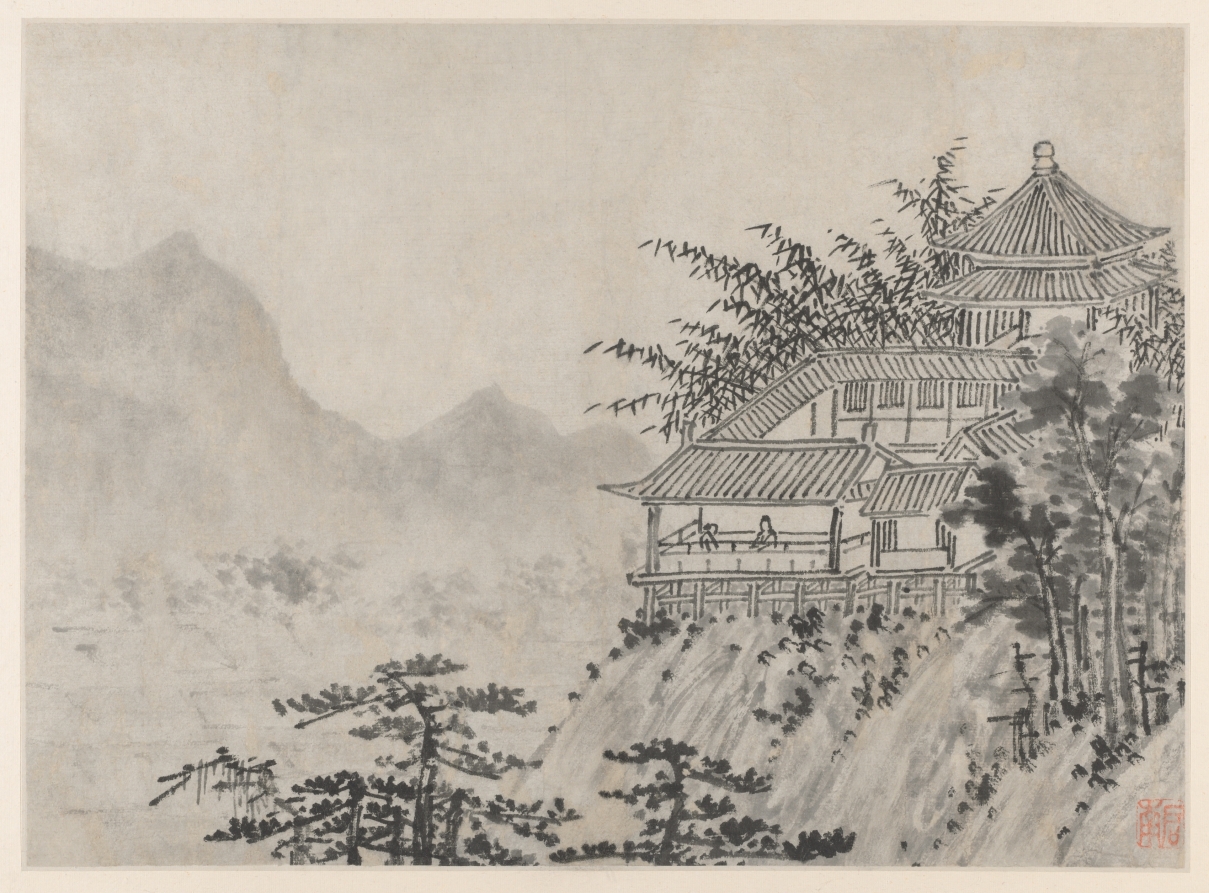 ↗
The Thousand Acres of Clouds, from Twelve Views of Tiger Hill, Suzhou
Shen Zhou
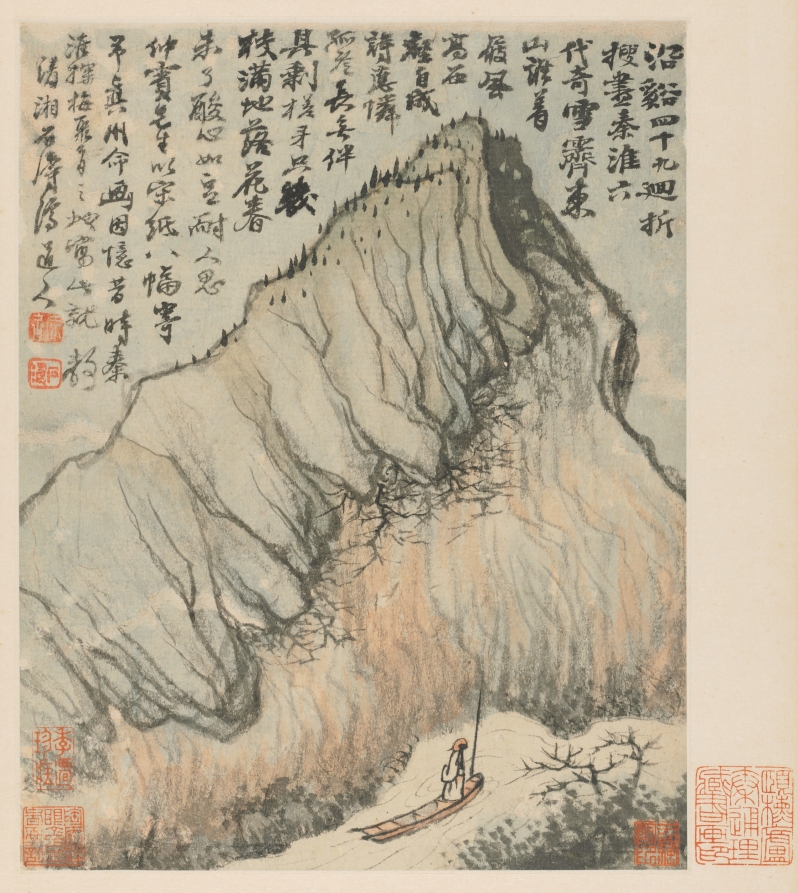 ↗
Reminiscences of Qinhuai River
Shitao
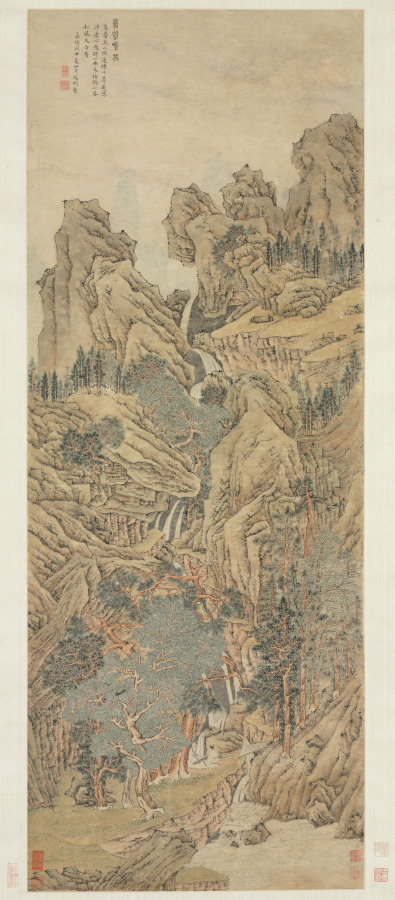 ↗
Playing the Qin in a Secluded Valley
Wen Zhengming