Leonard C. Hanna Jr. Fund · The Cleveland Museum of Art
Image: public domain (CC0) · Museum record & image source ↗
Buddha
Creator not recorded by the museum
- Date
- 600s
- Medium
- sandstone
- Dimensions
- Overall: 132.7 cm (52 1/4 in.); without tang: 114.2 cm (44 15/16 in.)
- Country / context
- Thailand
- Movement / tradition
- Southeast Asian arts
- Collection
- The Cleveland Museum of Art
- Pathway
- Southeast Asian arts ↗
This elegant, monumental sculpture is the earliest type of Buddha image to be made in Southeast Asia. It comes from a site in north-central Thailand that was part of the Dvaravati kingdom (500s–1200s). The body shows direct links with the sculptural traditions at Sarnath in northern India on the banks of the Ganges River. The expression of the face has the peaceful introspection that became canonical during the Gupta period of the 5th century in India. The shape of the head and facial features—unlike Indian precursors—suggest that the artists and patrons of Dvaravati made the Buddha resemble the local Mon population. The figure's stance has been rendered with remarkable fluidity, and the abstracted caps of the knees and minimalist modeling of the pelvis lend the figure an otherworldly, transcendent demeanor, balanced by the approachable smiling countenance.
Collection text · The Cleveland Museum of Art · CC0Start with what you can see: shapes, surface, colour and scale. How might the listed materials affect the way this object was made and experienced?
Looking prompt · an invitation to observe, not a historical interpretation.Follow a connection.
Explore the tradition ↗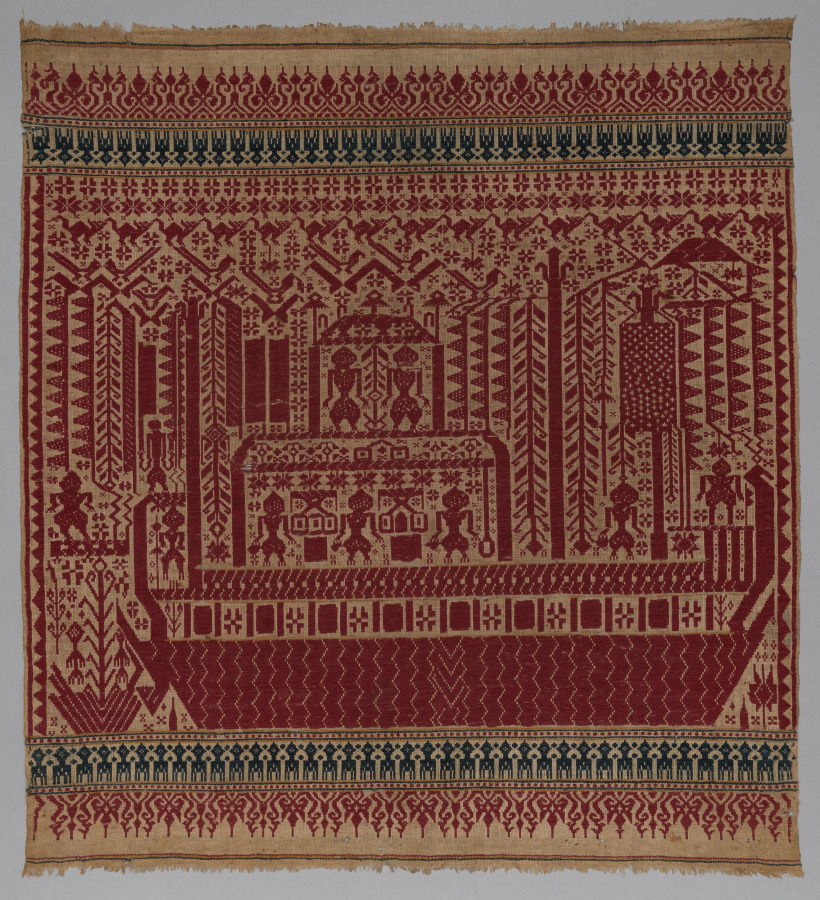 ↗
Tampan Pasisir (Ship Cloth)
Creator not recorded
 ↗
Knife (Mandau) and scabbard
Creator not recorded
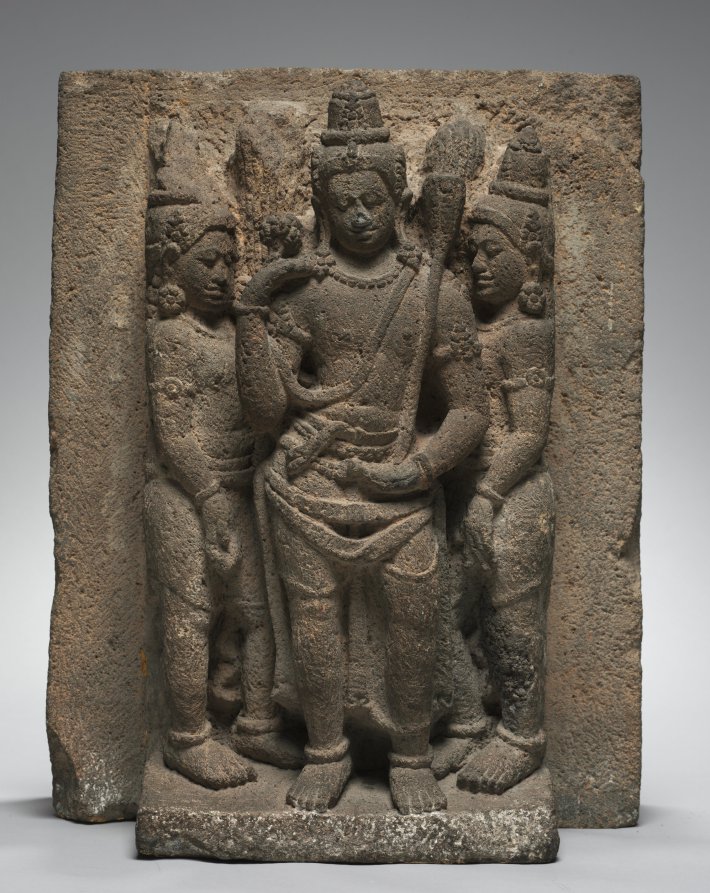 ↗
Triad
Creator not recorded
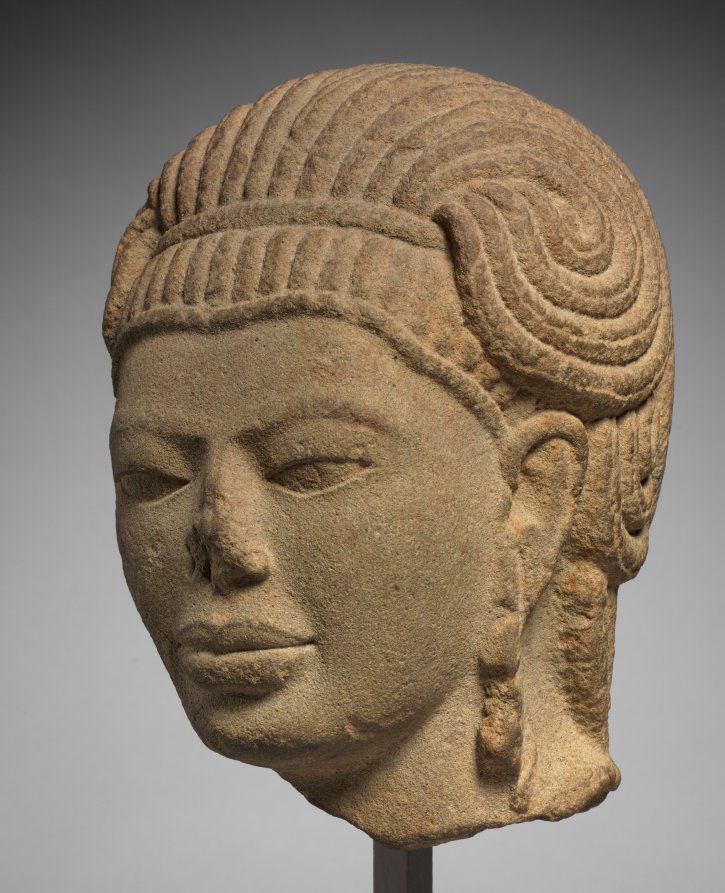 ↗
Head of Male Deity, possibly Aiyanar
Creator not recorded