 ↗
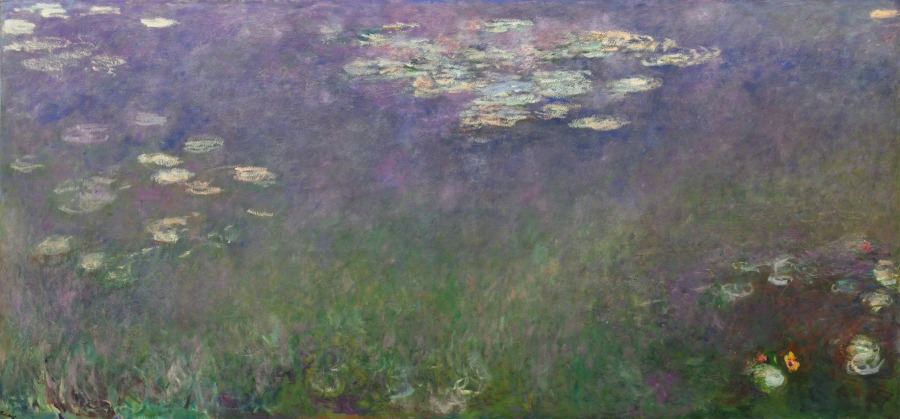
France, late 19th century-early 20th century · 约1915—1926年
睡莲(百子莲)
克洛德·莫奈
#2A2218#1F1C16#362A1C#2D271C#5F482E#443524根据博物馆图像中的六组色彩估算,包含可见纸张或边框。复制方式和光照会影响结果;这里显示的是图像面积占比,而非颜料用量。
Gift of the Hanna Fund · 克利夫兰艺术博物馆
图像:公共领域(CC0)· 博物馆记录与图像来源 ↗
Amsterdam of the early 1600s was a religiously tolerant city, attracting many Jewish settlers of both Sephardic (Spanish and Portuguese) origin and Ashkenazic (Eastern European) descent. Rembrandt lived among both denominations and found inspiration in the manner and dress of the Ashkenazim, who maintained traditional comportment and attire and were less affluent than their Sephardim counterparts. As a result, many of the unidentified portraits from Rembrandt's late period once carried Jewish associations, but because of a lack of sufficient evidence, those assignations have since been reconsidered. Such is the case with Portrait of a Man, which was once considered a portrait of the Dutch Jewish philosopher Baruch Spinoza (1632–1677) as well as a representation of a Jewish student. Rembrandt's authorship of the painting has also undergone reassessment. The broad and thinly painted cloak and hat suggests the painting is likely a workshop product and while it does display Rembrandt's characteristic interest in a sitter's introspection, the figure's thoughtfulness remains comparatively superficial.
馆藏文字 · 克利夫兰艺术博物馆 · CC0从眼前可见之处开始:形状、表面、色彩与尺度。所列材料可能怎样影响作品的制作方式与观看体验?
观看提示 · 邀请你观察,而非对历史的定论。