 ↗
Iran, Tabriz, Ilkhanid period (1256-1353) · 1330–35
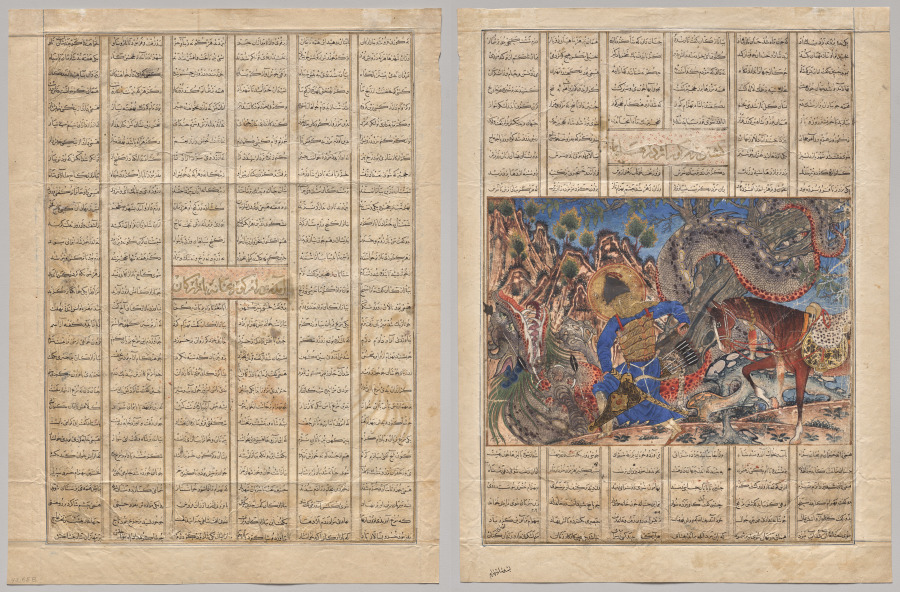
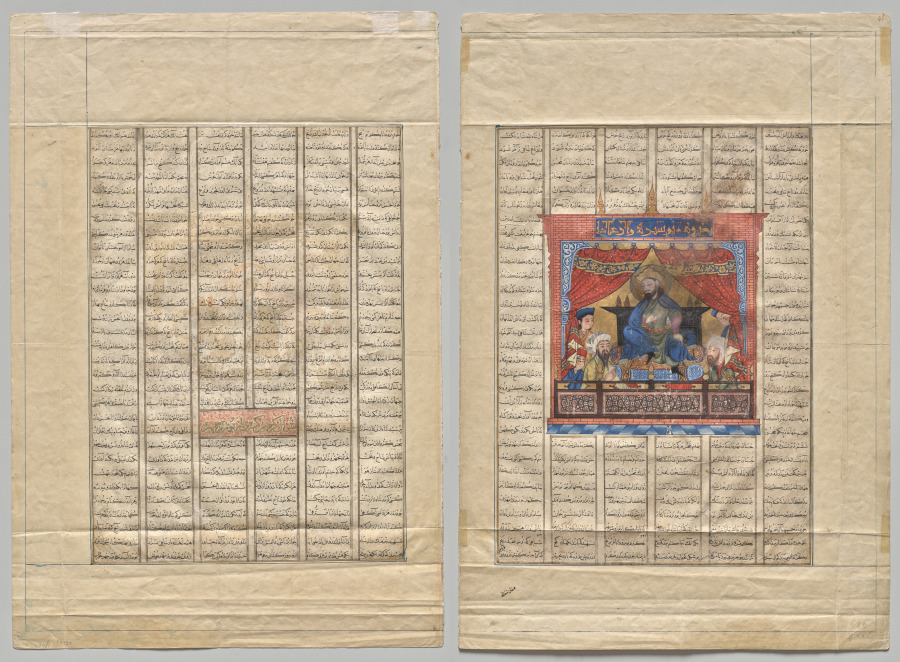
巴赫拉姆·古尔到商人家中(正面文字页);巴赫拉姆·古尔屠龙(背面)——《列王纪》册页
创作者未记录
Leonard C. Hanna Jr. Fund · 克利夫兰艺术博物馆
图像:公共领域(CC0)· 博物馆记录与图像来源 ↗
博物馆未记录创作者
The Hittites migrated into Anatolia in the 3rd millennium BCE and spoke an Indo-European language, a group that includes Greek, Latin, Persian, Sanskrit, English, and most modern European languages. They were the first ancient people to use iron for weapons. From about 1600–1200 BCE their empire was at its peak, extending from central Anatolia to Syria, and south along the eastern Mediterranean. Their vast empire and interest in commerce enabled the Hittites to spread Mesopotamian ideas and culture throughout the ancient Mediterranean world. This large basalt sculpture is exceptionally rare in depicting a Hittite god or priest-king wearing a horned conical crown, false beard, and long robe. He holds a bowl in his right hand and once held something in his left, perhaps a staff or sword.
馆藏文字 · 克利夫兰艺术博物馆 · CC0从眼前可见之处开始:形状、表面、色彩与尺度。所列材料可能怎样影响作品的制作方式与观看体验?
观看提示 · 邀请你观察,而非对历史的定论。↗创作者未记录
 ↗
创作者未记录
 ↗
创作者未记录
 ↗
创作者未记录