 ↗
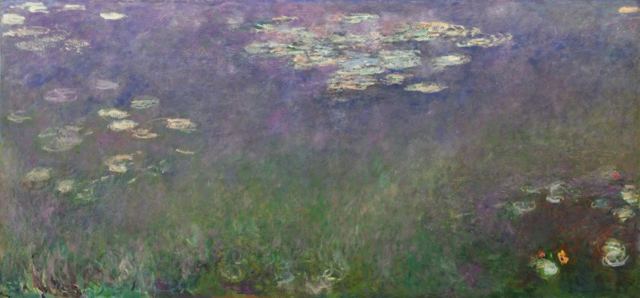
France, late 19th century-early 20th century · 约1915—1926年
睡莲(百子莲)
克洛德·莫奈
#D6D1C7#39433B#5D6959#455844#E2DED4#A6A899根据博物馆图像中的六组色彩估算,包含可见纸张或边框。复制方式和光照会影响结果;这里显示的是图像面积占比,而非颜料用量。
Bequest of Leonard C. Hanna Jr. · 克利夫兰艺术博物馆
图像许可: CC0 · 博物馆记录与图像来源 ↗
In September 1883 Van Gogh left the bustling Dutch city of The Hague in search of open countryside in which to paint. He moved to Drenthe, a village in northeastern Netherlands that was virtually untouched by the Industrial Revolution. He described the barren terrain as supremely beautiful and serene: "What tranquility, what expanse, what calmness in this nature." With a limited palette of steely greens and cool blues, Van Gogh masterfully portrayed one of the region’s expanses of heath—"a vast plane vanishing into infinity"—illuminated by the lilac hues of the evening sky.
馆藏文字 · 克利夫兰艺术博物馆 · CC01883年的水彩与粉笔风景以土色明暗构成,1889年油画则以色彩及方向性笔触激活表面。《加歇医生》中,蚀刻和干刻线条取代颜料色彩,说明晚年实验并非放弃素描或必然走向更鲜艳的绘画。
以下为艺术家整体创作背景,单件作品可能有所不同。
所选生涯作品涵盖水彩、油画及罕见蚀刻,形成不同表面。
方向鲜明的节奏笔触激活植物、天空和地面,版画线条则凝聚动势。
早期土色与后期强化色彩形成对照,最后的蚀刻仍具有强烈黑白表现力。
从眼前可见之处开始:形状、表面、色彩与尺度。所列材料可能怎样影响作品的制作方式与观看体验?
观看提示 · 邀请你观察,而非对历史的定论。