 ↗
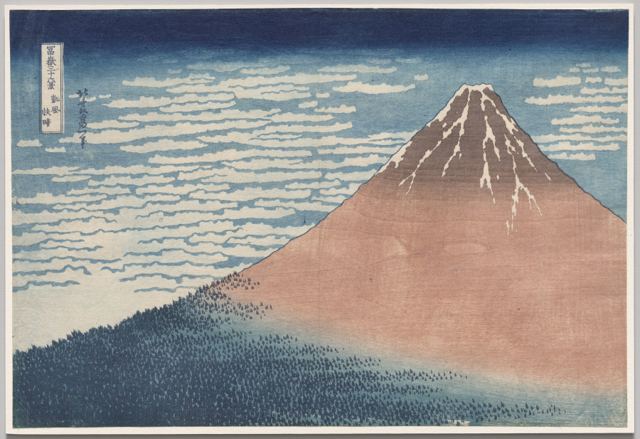
Japan, Edo period (1615–1868) · 1830年代初
凯风快晴,选自《富岳三十六景》
葛饰北斋
Purchase from the J. H. Wade Fund · 克利夫兰艺术博物馆
图像许可: CC0 · 博物馆记录与图像来源 ↗
The Ogata brothers Kōrin and Kenzan often collaborated on ceramics. This dish is one of a set used for serving tea cakes. Kenzan shaped the dish, after which Kōrin drew the iron oxide design of plovers, a type of shorebird, flying over waves. Kenzan then covered the object with a clear glaze and fired it. Kōrin placed his signature next to his design, while Kenzan signed the back.
馆藏文字 · 克利夫兰艺术博物馆 · CC0比较水墨梅枝、施釉盘及较晚的金地燕子花屏风,不对称笔势可作用于绢面、陶瓷器形或大型折屏。釉、墨及金属底改变颜色;盘子具有协作作者关系,“1709年后”也不是精确年份。
以下为艺术家整体创作背景,单件作品可能有所不同。
绢画、施釉陶器及金地屏风,让设计跨越不同器物。
鲜明剪影、不对称及重复纹样,把自然组织为节奏图案。
墨、釉及反射金改变亮度和对比,底色主动参与配色。
从眼前可见之处开始:形状、表面、色彩与尺度。所列材料可能怎样影响作品的制作方式与观看体验?
观看提示 · 邀请你观察,而非对历史的定论。