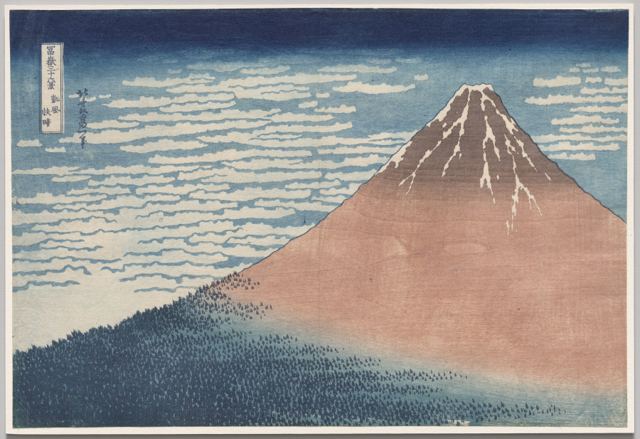
 ↗
Japan, Edo period (1615–1868) · early 1830s
South Wind, Clear Sky, from Thirty-Six Views of Mount Fuji
Katsushika Hokusai
Purchase from the J. H. Wade Fund · The Cleveland Museum of Art
Image licence: CC0 · Museum record & image source ↗
The Ogata brothers Kōrin and Kenzan often collaborated on ceramics. This dish is one of a set used for serving tea cakes. Kenzan shaped the dish, after which Kōrin drew the iron oxide design of plovers, a type of shorebird, flying over waves. Kenzan then covered the object with a clear glaze and fired it. Kōrin placed his signature next to his design, while Kenzan signed the back.
Collection text · The Cleveland Museum of Art · CC0Compare ink plum branches, the glazed dish and the later gold-ground iris screens. Brush-made asymmetry can operate on silk, a shaped ceramic object or a large folding surface. Colour changes with glaze, ink and metallic ground. The dish has collaborative authorship, while “after 1709” is a date boundary, not an exact year.
Artist-wide context; individual works may differ.
Silk painting, glazed ceramics and gold-ground screens carry designs across very different objects.
Bold silhouettes, asymmetry and repeated motifs organise nature as rhythmic pattern.
Ink, glaze and reflective gold alter brightness and contrast; the ground is an active part of the palette.
Start with what you can see: shapes, surface, colour and scale. How might the listed materials affect the way this object was made and experienced?
Looking prompt · an invitation to observe, not a historical interpretation.↗Katsushika Hokusai
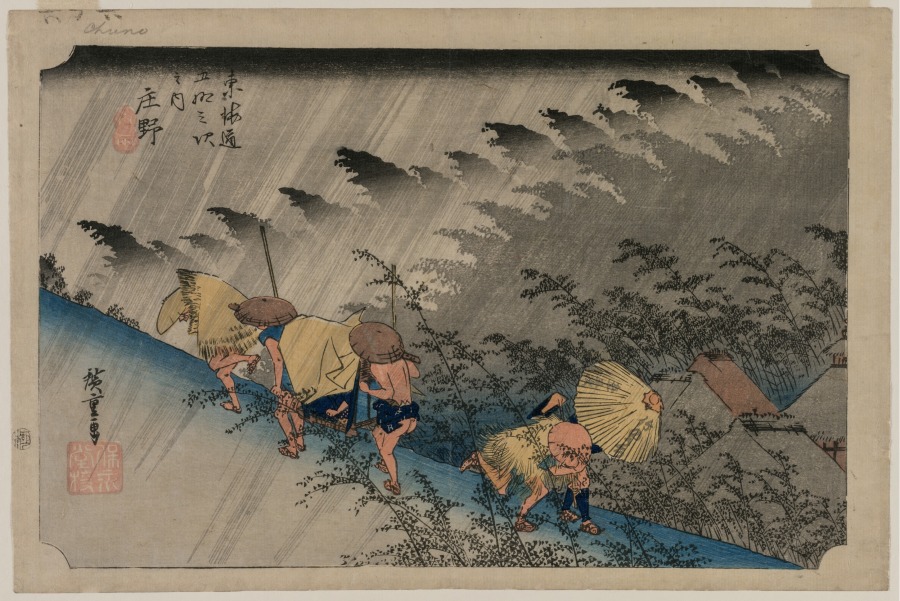 ↗
Utagawa Hiroshige
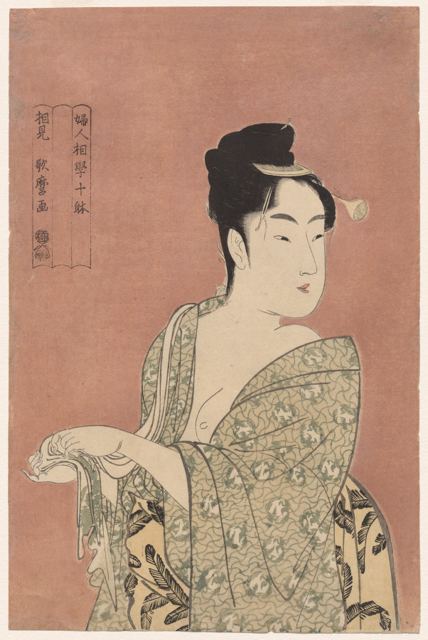 ↗
Kitagawa Utamaro
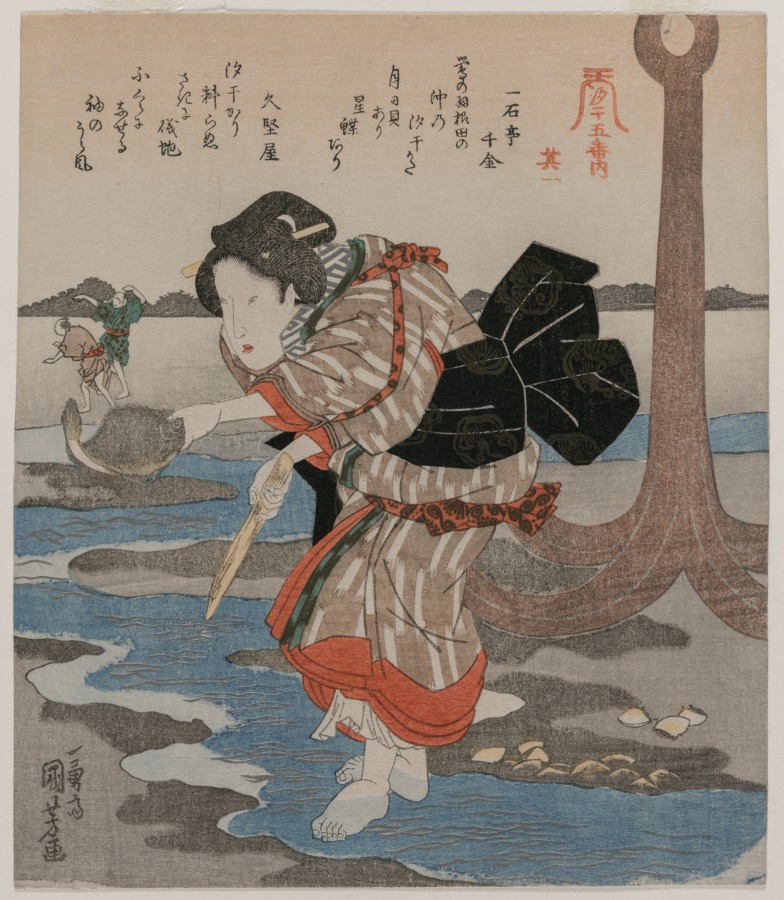 ↗
Utagawa Kuniyoshi