 ↗
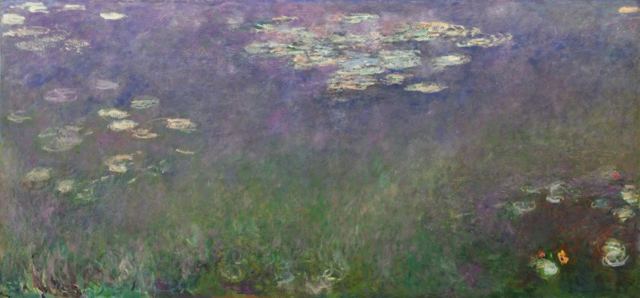
France, late 19th century-early 20th century · 约1915—1926年
睡莲(百子莲)
克洛德·莫奈
#474940#3C3D38#40413B#353533#585950#B4B1A8根据博物馆图像中的六组色彩估算,包含可见纸张或边框。复制方式和光照会影响结果;这里显示的是图像面积占比,而非颜料用量。
Anonymous Gift · 克利夫兰艺术博物馆
图像许可: CC0 · 博物馆记录与图像来源 ↗
In 1886, Winslow Homer began to produce oil paintings and watercolors of subjects in the Adirondack Mountains, where he and his brother Charles had fished and hunted since the 1870s. In Leaping Trout, a silvery trout propels itself from the water in pursuit of a hapless insect or a fisherman’s fly. Homer’s choice to adopt the fish’s perspective, rather than a fisherman’s, is quite unconventional and heightens the drama and immediacy of the scene. His technique, influenced by the free brushwork of French Impressionism, similarly animates his still-life subject. Luminous washes of transparent blue and grey watercolor suggest the fish’s iridescent skin, while opaque pricks of bright red on its body lend a decorative effect reminiscent of Japanese prints. On the water’s surface, Homer uses scraping to create two brilliant white highlights, and dry brushing to produce the impression of a reflective surface. Although the overall effect is mysterious and dreamlike, the color and movement of the fish is carefully studied, suggesting Homer’s desire to appeal to the sportsmen who might buy his works.
馆藏文字 · 克利夫兰艺术博物馆 · CC01864年油画建立人物叙事,《跃起的鳟鱼》发挥水彩透明洗染及快速重音,晚期海景油画则使浪与岩石具有纪念碑感。比较水彩如何利用纸面亮度,以及油彩叠层如何形成更厚重、坚实的表面。
以下为艺术家整体创作背景,单件作品可能有所不同。
油彩建立厚实表面,水彩利用透明洗染、留白及清晰重音。
明确体块与有力斜线组织人物、动物、海浪与岩石。
冷色水面与深色陆地依靠对比,而非整体高饱和度获得力量。
从眼前可见之处开始:形状、表面、色彩与尺度。所列材料可能怎样影响作品的制作方式与观看体验?
观看提示 · 邀请你观察,而非对历史的定论。