 ↗
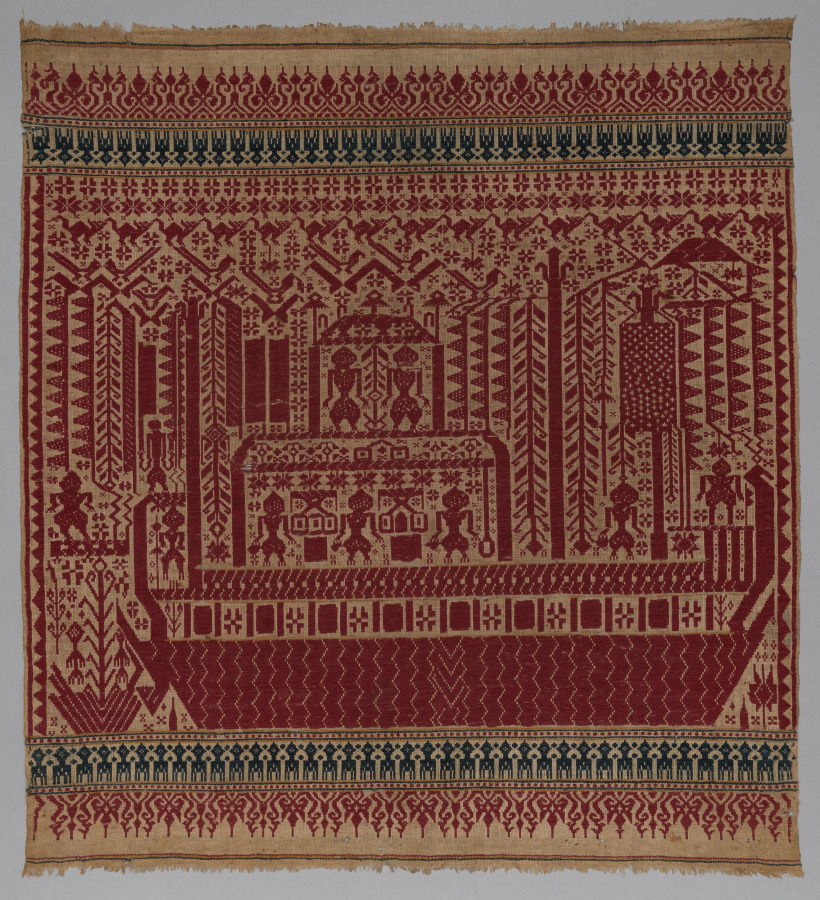
Indonesia, Sumatra, Lampung, 19th century · 19世纪
坦潘沿海船纹织物
创作者未记录
Leonard C. Hanna Jr. Fund · 克利夫兰艺术博物馆
图像:公共领域(CC0)· 博物馆记录与图像来源 ↗
博物馆未记录创作者
The Cham adopted Indian Buddhist and Hindu religious systems, languages, and the practice of building stone temples and monasteries. The lion, which is ubiquitous on Indian monuments, was also incorporated as a protector at Cham sacred sites. In Champa, however, the roaring and rearing lion imagery is semihuman and distinctively aggressive and extroverted. This powerful figure rearing in a combative pose was formerly in the renowned Pan-Asian Collection of Southeast Asian art assembled during the 1960s and 1970s by one major collector, Christian Humann of the renowned Rothschild banking family.
馆藏文字 · 克利夫兰艺术博物馆 · CC0从眼前可见之处开始:形状、表面、色彩与尺度。所列材料可能怎样影响作品的制作方式与观看体验?
观看提示 · 邀请你观察,而非对历史的定论。