 ↗
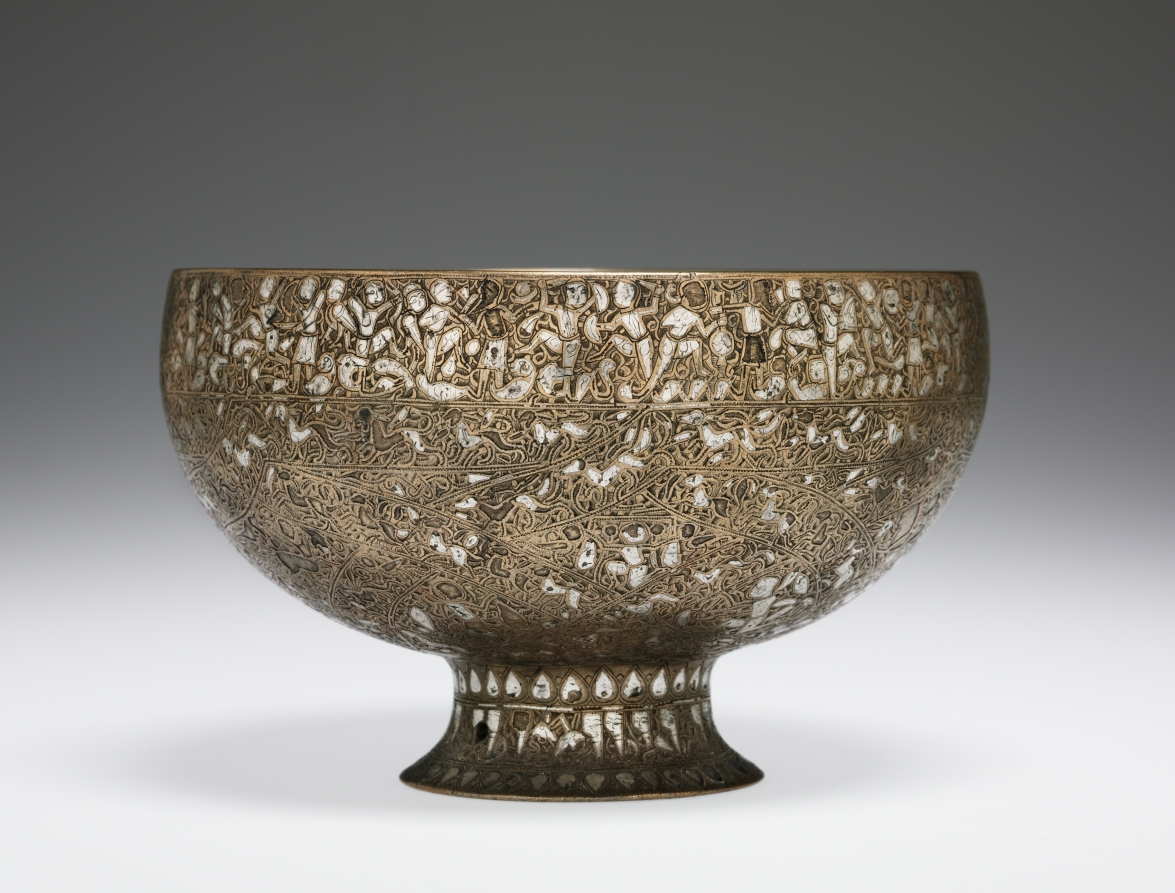
Iran, Seljuq period of Iran (1037–1194) · 1200–1221
饰拟人化文字的韦德杯
创作者未记录
Leonard C. Hanna Jr. Fund · 克利夫兰艺术博物馆
图像:公共领域(CC0)· 博物馆记录与图像来源 ↗
博物馆未记录创作者
When members of the royal family or priesthood traveled in a public festival procession or to a temple to make offerings or participate in a ceremony, they would be carried in a palanquin, or a covered litter. Portable objects of veneration, such as bronze images or a sacred fire, were also carried on palanquins. The palanquins had wooden poles, hanging seats or raised platforms, and bronze fittings cast in intricate forms and gilt, lending the palanquins a sumptuous quality.The royal palanquins were typically fitted with multiheaded, serpent-shaped finials at the ends of the poles and corners of the elevated platforms. Naga means serpent in Sanskrit, a language from India selectively appropriated by the Khmer in Cambodia. In their own indigenous mythology, the Khmer people trace their descent from a naga princess and a prince from the island of Java who journeyed to Cambodia. The naga remains a potent emblem for the Khmer nation to this day; it is ubiquitous on Cambodian monuments.
馆藏文字 · 克利夫兰艺术博物馆 · CC0从眼前可见之处开始:形状、表面、色彩与尺度。所列材料可能怎样影响作品的制作方式与观看体验?
观看提示 · 邀请你观察,而非对历史的定论。