↗
Japan, Edo period (1615–1868) · 1790年代末
风中樱花
歌川丰国
#CFC4B2#B3AD9D#D3CAB7#989082#E8DFCA#C3B9A6根据博物馆图像中的六组色彩估算,包含可见纸张或边框。复制方式和光照会影响结果;这里显示的是图像面积占比,而非颜料用量。
Bequest of Mrs. A. Dean Perry · 克利夫兰艺术博物馆
图像许可: CC0 · 博物馆记录与图像来源 ↗
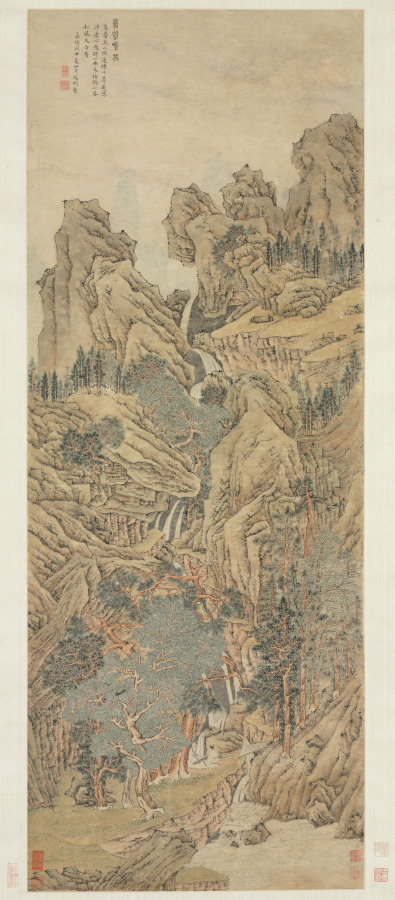
Shen Zhou, a native from Suzhou, was descended from a prominent land-owning family with strong ties to literati culture. Because Shen Zhou never entered government service, he had ample opportunity to cultivate the arts of painting, poetry, and calligraphy.Chrysanthemums and red osmanthus both bloom in autumn. The deep orange osmanthus flowers emanate a characteristically sweet fragrance. According to his inscription on the painting, Shen Zhou sought to imitate the style of the Yuan dynasty (1271–1368) painter Wang Yuan. His color-filled brushstrokes and washes, however, anticipate the flower painting style of Yun Shouping, whose Peonies are also in the Cleveland Museum of Art collection, https://www.clevelandart.org/art/1967.192. The sheer size and complex composition of this scroll are impressive.
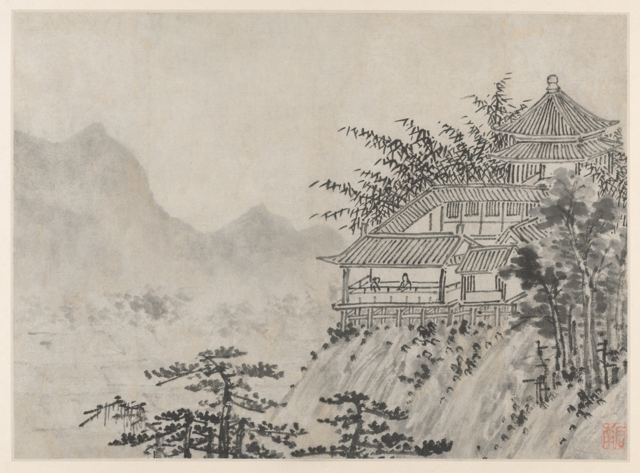
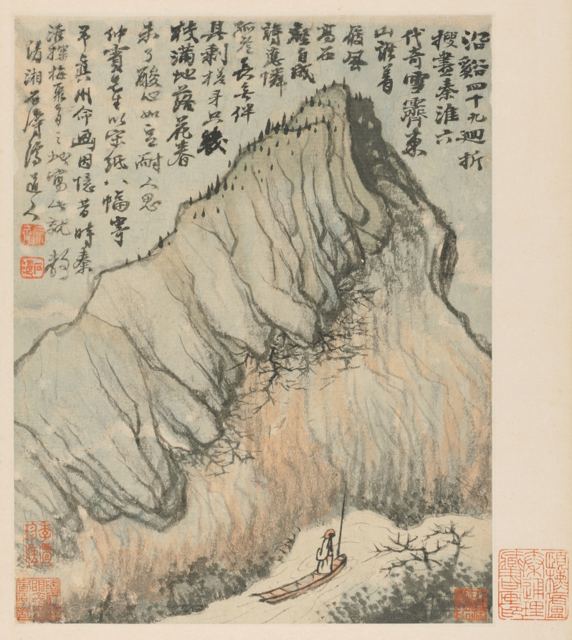
馆藏文字 · 克利夫兰艺术博物馆 · CC01468年的花卉画明确与古人对话,后来的虎丘册页以笔墨组织熟悉地点,1500年的海棠则聚焦自然片段。区分肌理、节奏及浓淡深度的,主要是墨,而非大量颜料。
以下为艺术家整体创作背景,单件作品可能有所不同。
纸本水墨让湿染、干笔与露出的纸面共同参与表达。
书法性笔墨节奏联系山水皴理、花木形态与题跋。
墨色浓淡常承担明暗层次,淡彩辅助而非替代笔墨结构。
从眼前可见之处开始:形状、表面、色彩与尺度。所列材料可能怎样影响作品的制作方式与观看体验?
观看提示 · 邀请你观察,而非对历史的定论。