 ↗
Japan, Edo period (1615–1868) · late 1790s
Cherry Blossoms in the Wind
Utagawa Toyokuni
#CFC4B2#B3AD9D#D3CAB7#989082#E8DFCA#C3B9A6Estimated from six colour groups in the museum image, including visible paper or borders. Reproduction and lighting affect the result; these are image-area proportions, not pigment measurements.
Bequest of Mrs. A. Dean Perry · The Cleveland Museum of Art
Image licence: CC0 · Museum record & image source ↗
Shen Zhou, a native from Suzhou, was descended from a prominent land-owning family with strong ties to literati culture. Because Shen Zhou never entered government service, he had ample opportunity to cultivate the arts of painting, poetry, and calligraphy.Chrysanthemums and red osmanthus both bloom in autumn. The deep orange osmanthus flowers emanate a characteristically sweet fragrance. According to his inscription on the painting, Shen Zhou sought to imitate the style of the Yuan dynasty (1271–1368) painter Wang Yuan. His color-filled brushstrokes and washes, however, anticipate the flower painting style of Yun Shouping, whose Peonies are also in the Cleveland Museum of Art collection, https://www.clevelandart.org/art/1967.192. The sheer size and complex composition of this scroll are impressive.
Collection text · The Cleveland Museum of Art · CC0The 1468 flower painting declares a dialogue with an earlier master; the later Tiger Hill leaf turns a known place into a sequence of brush-made views; the 1500 crab apple concentrates on a fragment of nature. Ink, rather than abundant pigment, carries distinctions of texture, rhythm and tonal depth.
Artist-wide context; individual works may differ.
Ink on paper makes wet washes, dry brush and exposed support equally expressive.
Calligraphic brush rhythms connect landscape texture, plant forms and written inscriptions.
Ink density often carries the tonal range; light colour supports rather than replaces brush structure.
Start with what you can see: shapes, surface, colour and scale. How might the listed materials affect the way this object was made and experienced?
Looking prompt · an invitation to observe, not a historical interpretation.↗Utagawa Toyokuni
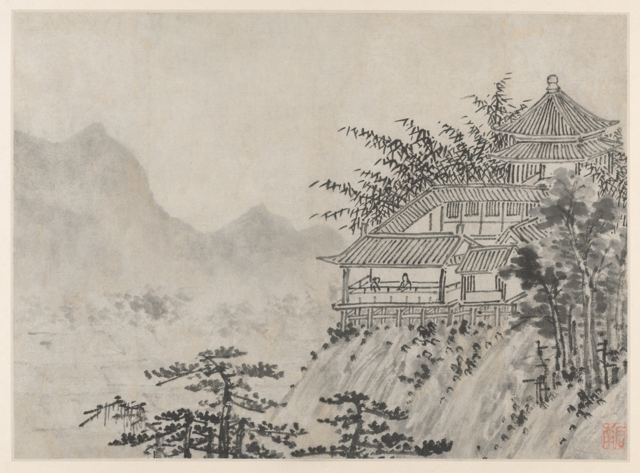 ↗
Shen Zhou
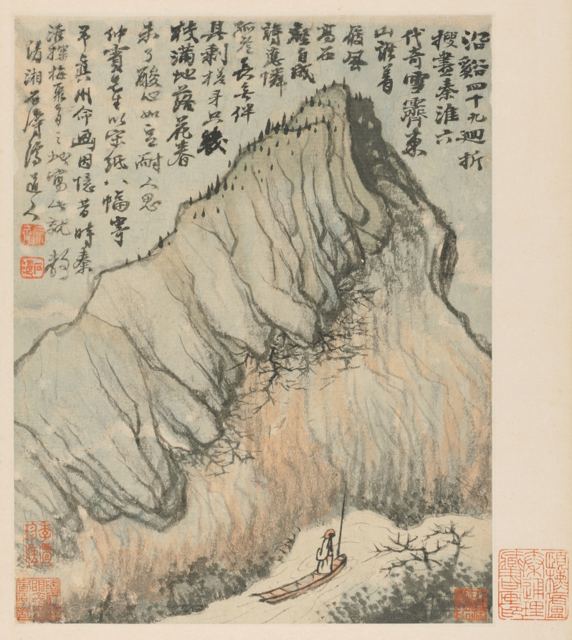 ↗
Shitao
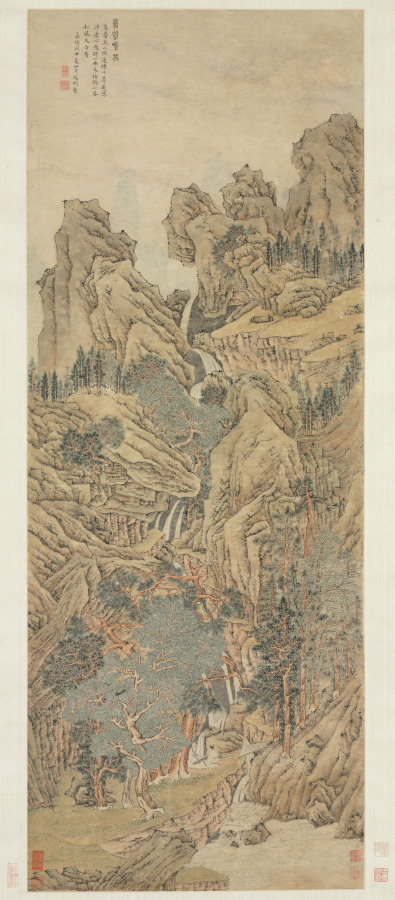 ↗
Wen Zhengming