 ↗
France, late 19th century-early 20th century · 约1915—1926年
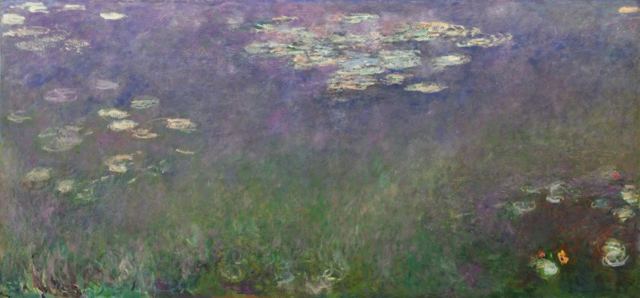
睡莲(百子莲)
克洛德·莫奈
#3F5260#C39897#A6B4B0#969BA3#8D7A81#C1BCA6根据博物馆图像中的六组色彩估算,包含可见纸张或边框。复制方式和光照会影响结果;这里显示的是图像面积占比,而非颜料用量。
自动识别图像中面积较小、色彩鲜明的细节。这些区域已包含在上方主色分组内,其占比无需再次相加。
#C2884F≈ 1.51%#587936≈ 0.18%Nancy F. and Joseph P. Keithley Collection Gift · 克利夫兰艺术博物馆
图像许可: CC0 · 博物馆记录与图像来源 ↗
Due to his diagnosis of persistent rheumatism, Henri-Edmond Cross left Paris in 1891 and settled in the seaside village of Saint-Clair on the Mediterranean coast where the climate was more temperate. He expressed his enthusiasm for the French Riveria to his mother, “In the distance, the blue silhouette of the Maures and the Estérel—I have enough here to keep me busy all of life—I have just discovered happiness.” Once he had settled in the south, Cross adopted the Neo-Impressionist technique of Pointillism—applying paint in small dots or dashes of complementary colors that mix in the beholder’s eye to create an intense sensation of color and light. Here, a spectacular cloud is illuminated by the sunset. A pair of cypress trees link the garden landscape below to the vivid sky above.
馆藏文字 · 克利夫兰艺术博物馆 · CC0比较九十年代中期的云、1897年彩色石版及约1900年的河景油画。印刷色和油彩以不同工序形成亮感,注意笔迹大小与间距,以及树影、水和天的关系。这些代表成熟实验,而非最早训练。
以下为艺术家整体创作背景,单件作品可能有所不同。
彩色石版及油画,以不同工序组织分离笔迹。
马赛克式触点及扩大的笔迹,让风景成为节奏表面。
对比色单元产生亮感,常更重视和谐而非自然固有色。
从眼前可见之处开始:形状、表面、色彩与尺度。所列材料可能怎样影响作品的制作方式与观看体验?
观看提示 · 邀请你观察,而非对历史的定论。