 ↗
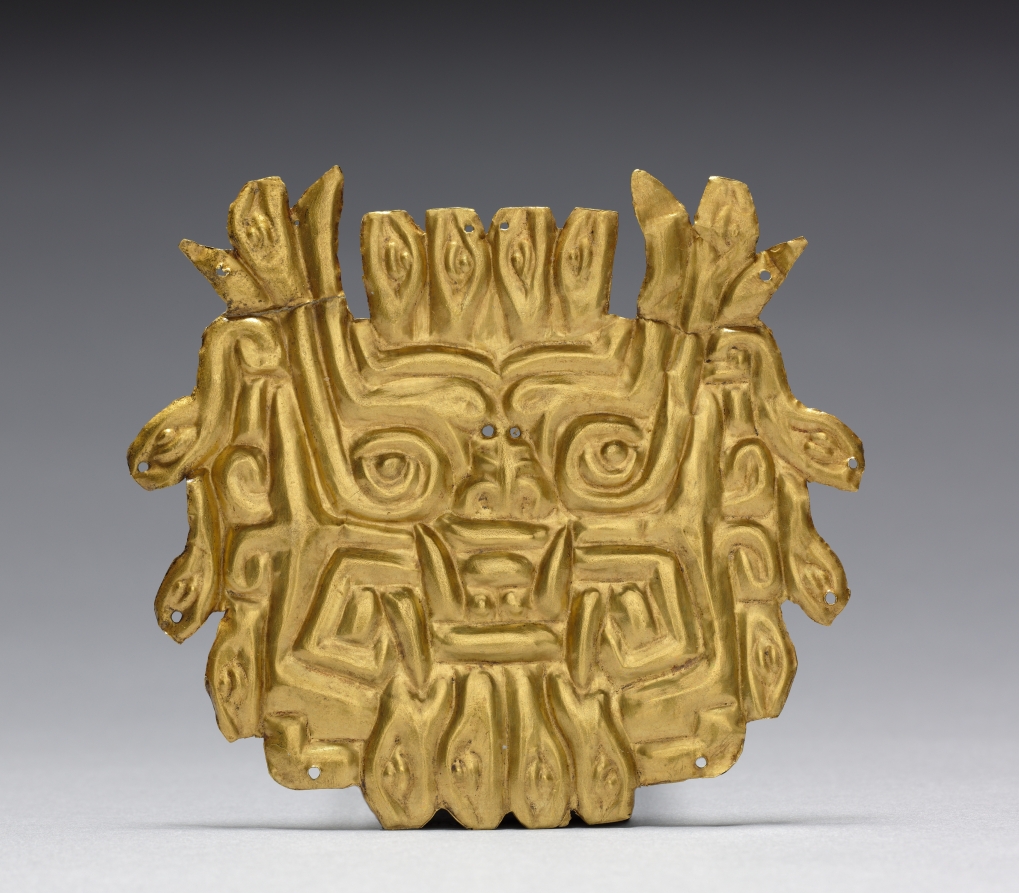
Peru, North Coast, Chongoyape(?), Chavín style (900-200 BCE) · c. 500–200 BCE
饰牌
作者未记录
John L. Severance Fund · 克利夫兰艺术博物馆
图像许可: CC0 · 图像使用政策 · 博物馆记录与图像来源 ↗
博物馆未记录创作者
燧石伸出的尖角让周围空隙变得重要。先只描空形,可能不描石头本身也能得到它特有的轮廓。
本站观察与练习建议;历史和制作资料见下方来源。
资料依据 The Cleveland Museum of Art ↗
可对照阅读
Named for their unusual shapes, eccentric flints often have intricately silhouetted figures like this. At the forehead of the main profile face is a smoking torch, the insignia of a deity closely linked to rulers and known today as K’awil. Smaller faces appear on three protrusions. Some flints may have served as scepters; they also were buried as offerings beneath buildings and sculptures.
馆藏文字 · 克利夫兰艺术博物馆 · CC0