 ↗
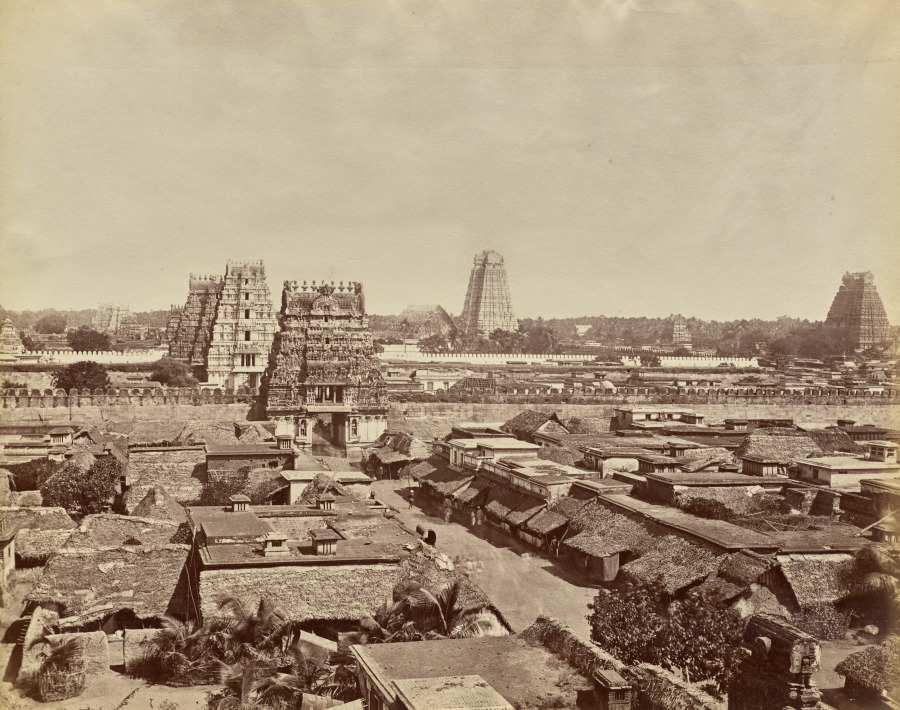
印度 · 1878
从岩顶俯瞰印度特里奇诺波利城镇
尼古拉斯摄影公司
Purchase from the J. H. Wade Fund · 克利夫兰艺术博物馆
图像许可: CC0 · 图像使用政策 · 博物馆记录与图像来源 ↗
伯恩与谢泼德摄影事务所
兰比尔·辛格与多格拉宫廷成员同在一图。即使把面孔都缩成小点,谁是君主可能仍然看得出,因为其余人也在替他确定位置。
一张画里既有一家人,也有宫廷秩序。先看谁能靠近君主,再比较面孔,人与人的距离也能画出身份。
本站观察与练习建议;历史和制作资料见下方来源。
资料依据 The Cleveland Museum of Art ↗
可对照阅读
Ranbir Singh (1830–1885), a ruler of the military Dogra dynasty, sits enthroned, surrounded by members of his court. He was the son of Gulab Singh (reigned 1846–1856), depicted in the portrait at the left. The courtiers in the front row—including his son—sit in European-style chairs, and one of his soldiers wears a British-style uniform and helmet. The picture’s oval format was popular among the British. These visual elements communicate Dogra’s allegiance to British colonial rule. Ranbir Singh supported the British during the Uprising of 1857, after which India became part of the British Empire.
馆藏文字 · 克利夫兰艺术博物馆 · CC0