 ↗
China, Ming dynasty (1368–1644) · 1490年之后
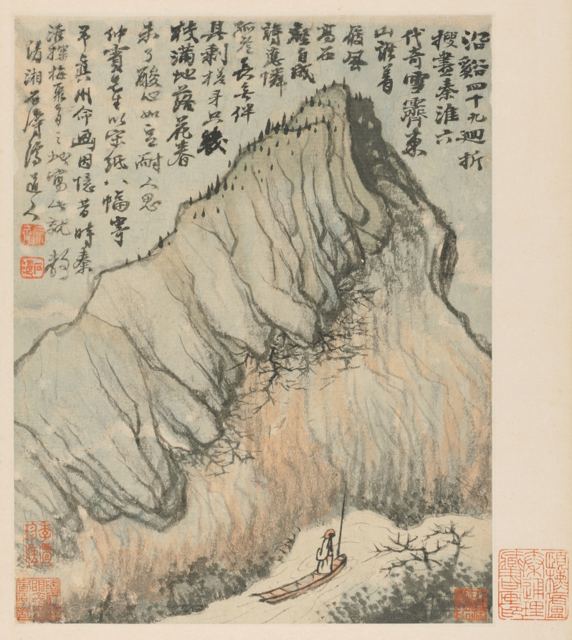
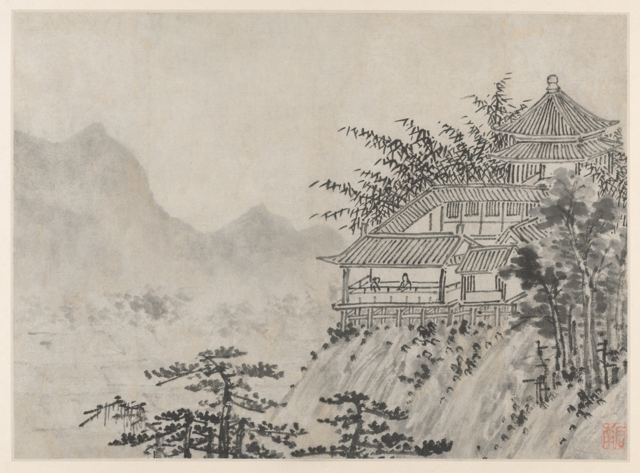
千顷云,选自《苏州虎丘十二景》
沈周
#878173#E9DCC8#DED1BD#ADA393#C5B9A7#F0E5D0根据博物馆图像中的六组色彩估算,包含可见纸张或边框。复制方式和光照会影响结果;这里显示的是图像面积占比,而非颜料用量。
Gift of The Print Club of Cleveland · 克利夫兰艺术博物馆
图像许可: CC0 · 图像使用政策 · 博物馆记录与图像来源 ↗
沿窗边的光走到缝补的双手。把页边的用光提示与布料必须看清的那一处对起来读。
本站观察与练习建议;历史和制作资料见下方来源。
资料依据 The Cleveland Museum of Art ↗
可对照阅读
Camille Pissarro used the French countryside and its inhabitants as the subject of his art throughout his career. He frequently depicted women sewing, often outdoors or seated beside a window, as seen in this drawing. He indicated the effects of natural light illuminating his subject with the notation "lumière" at the left margin of the drawing.
馆藏文字 · 克利夫兰艺术博物馆 · CC0毕沙罗在纸边记下了“光”。有了这条给自己的提示,再看窗边做针线的女人,可以琢磨他怎么留亮:一种办法是让纸面露出来,另一种是在较暗的地方补上不透明的白。拿一张废纸各试一次,看看哪种亮处边缘更柔和。
本站解读 · 目录事实与画面观察
核对博物馆记录 ↗