 ↗
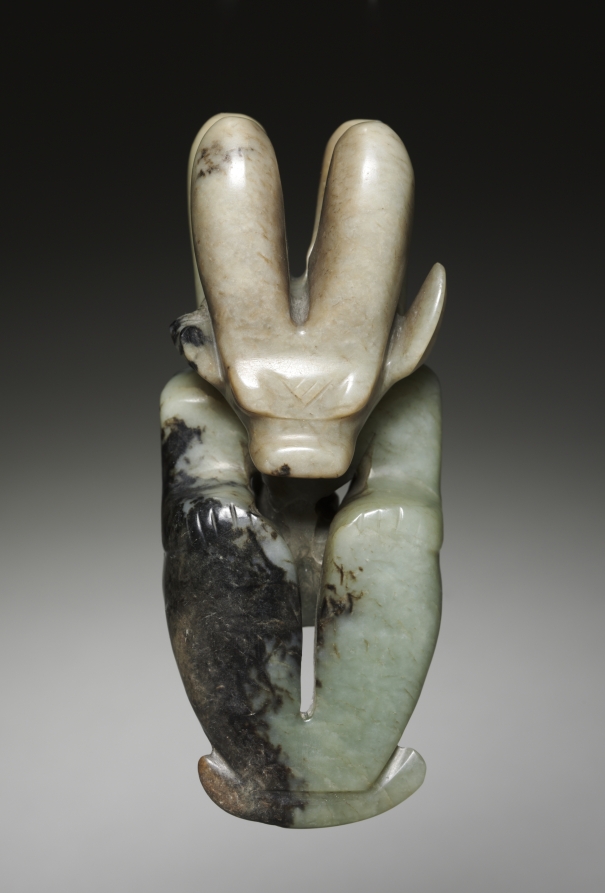
Northeast China, Neolithic period, probably Hongshan culture (4700–2920 BCE) · c. 4700–2920 BCE
牛首坐像形护符
作者未记录
Purchase from the J. H. Wade Fund · 克利夫兰艺术博物馆
图像许可: CC0 · 图像使用政策 · 博物馆记录与图像来源 ↗
博物馆未记录创作者
鹤与蛇都有长曲线。把近似的线接到翅膀或盘卷的身体上,画出来的动作会全然不同。
本站观察与练习建议;历史和制作资料见下方来源。
资料依据 The Cleveland Museum of Art ↗
可对照阅读
A different style of ritual art developed in the state of Chu in South China. In addition to bronze vessels, lacquered wood artifacts expanded the repertory of ritual implements. This extraordinary sculpture was probably a drum stand for supporting a suspended drum in ritual ceremonies. It is unique among other excavated drum stands of the Chu, which typically show two birds standing on tigers. The theme of the bird stepping on the serpent was common in the Chu visual culture. Yet the slender proportions and seemingly flimsy structure of this particular set raise the question of whether it was utilitarian or mostly served symbolic functions in the tomb. The birds' and serpents' bodies have designs painted in red lacquer and yellow pigment against the black lacquer. Scientific analyses confirm the additional use of a blue or green pigment that has been discolored over time.
馆藏文字 · 克利夫兰艺术博物馆 · CC0