↗
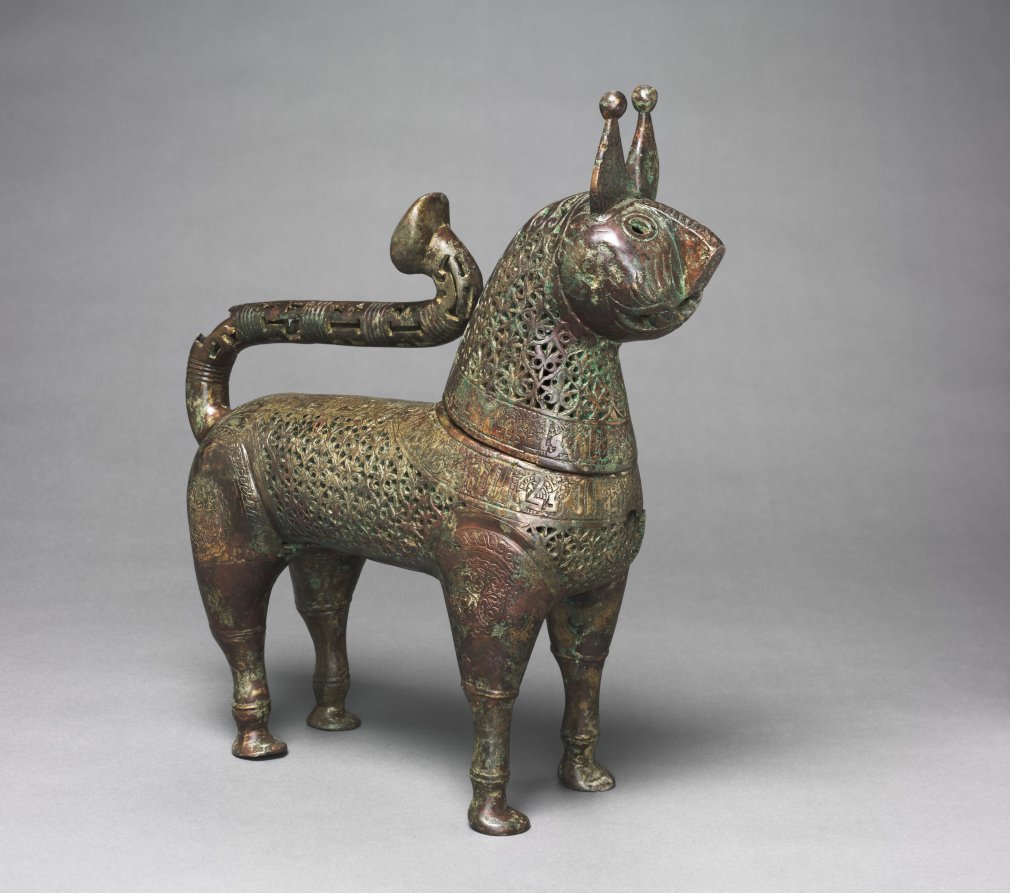
Iran, Seljuq period of Iran (1037–1194) · 1200–1221
饰拟人化文字的韦德杯
作者未记录
Leonard C. Hanna Jr. Fund · 克利夫兰艺术博物馆
图像许可: CC0 · 图像使用政策 · 博物馆记录与图像来源 ↗
博物馆未记录创作者
成对的那伽顶饰标出两端。试画中间的空形,看看何以一对装饰能框出入口,单件却做不到。
本站观察与练习建议;历史和制作资料见下方来源。
资料依据 The Cleveland Museum of Art ↗
可对照阅读
When members of the royal family or priesthood traveled in a public festival procession or to a temple to make offerings or participate in a ceremony, they would be carried in a palanquin, or a covered litter. Portable objects of veneration, such as bronze images or a sacred fire, were also carried on palanquins. The palanquins had wooden poles, hanging seats or raised platforms, and bronze fittings cast in intricate forms and gilt, lending the palanquins a sumptuous quality.The royal palanquins were typically fitted with multiheaded, serpent-shaped finials at the ends of the poles and corners of the elevated platforms. Naga means serpent in Sanskrit, a language from India selectively appropriated by the Khmer in Cambodia. In their own indigenous mythology, the Khmer people trace their descent from a naga princess and a prince from the island of Java who journeyed to Cambodia. The naga remains a potent emblem for the Khmer nation to this day; it is ubiquitous on Cambodian monuments.
馆藏文字 · 克利夫兰艺术博物馆 · CC0