 ↗
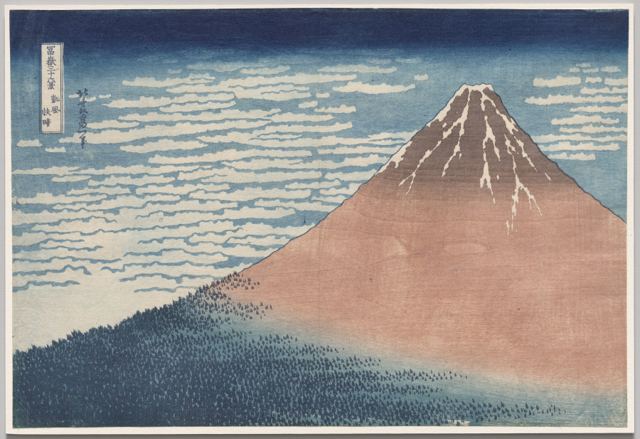
Japan, Edo period (1615–1868) · 1830年代初
凯风快晴,选自《富岳三十六景》
葛饰北斋
The Kelvin Smith Collection, given by Mrs. Kelvin Smith · 克利夫兰艺术博物馆
图像许可: CC0 · 图像使用政策 · 博物馆记录与图像来源 ↗
诗和配图不必定格同一瞬间。先读诗,再找画师让哪个细节在眼前多停了一会儿。
本站观察与练习建议;历史和制作资料见下方来源。
资料依据 The Cleveland Museum of Art ↗
可对照阅读
Katsushika Hokusai designed this print series from the perspective of a confused nurse attempting to illustrate classical poetry but missing the subtle allusions. This interpretation creates what would have been considered a comical disconnect between poem and image. The poem on this print reads as follows: In the mountain village,it is in winter that my lonelinessincreases most,when I think of how both have dried up,the grasses and people’s visits. —Translation by Joshua Mostow While nobleman Minamoto no Muneyuki (died 939) wrote of dying grasses, the nurse imagines instead a lively scene of hunters warming themselves around a fire.
馆藏文字 · 克利夫兰艺术博物馆 · CC0