 ↗
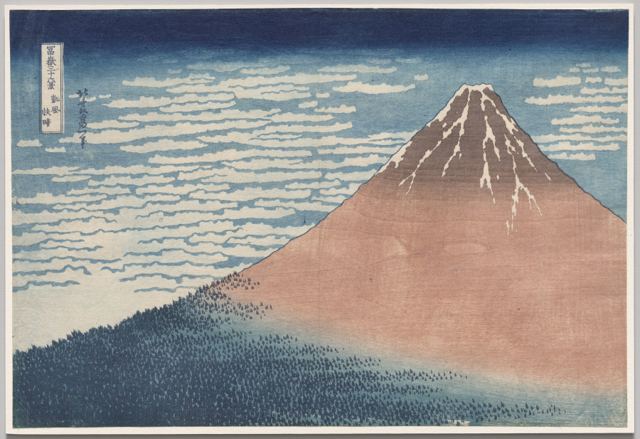
Japan, Edo period (1615–1868) · early 1830s
South Wind, Clear Sky, from Thirty-Six Views of Mount Fuji
Katsushika Hokusai
The Kelvin Smith Collection, given by Mrs. Kelvin Smith · The Cleveland Museum of Art
Image licence: CC0 · Image policy · Museum record & image source ↗
A poem and its printed illustration need not describe the same instant. Read the verse first, then ask which detail the designer has chosen to make last longer in the eye.
Site interpretation and practical exercises. Historical and technical evidence is linked below.
Sources for context The Cleveland Museum of Art ↗
Read alongside
Katsushika Hokusai designed this print series from the perspective of a confused nurse attempting to illustrate classical poetry but missing the subtle allusions. This interpretation creates what would have been considered a comical disconnect between poem and image. The poem on this print reads as follows: In the mountain village,it is in winter that my lonelinessincreases most,when I think of how both have dried up,the grasses and people’s visits. —Translation by Joshua Mostow While nobleman Minamoto no Muneyuki (died 939) wrote of dying grasses, the nurse imagines instead a lively scene of hunters warming themselves around a fire.
Collection text · The Cleveland Museum of Art · CC0↗Katsushika Hokusai
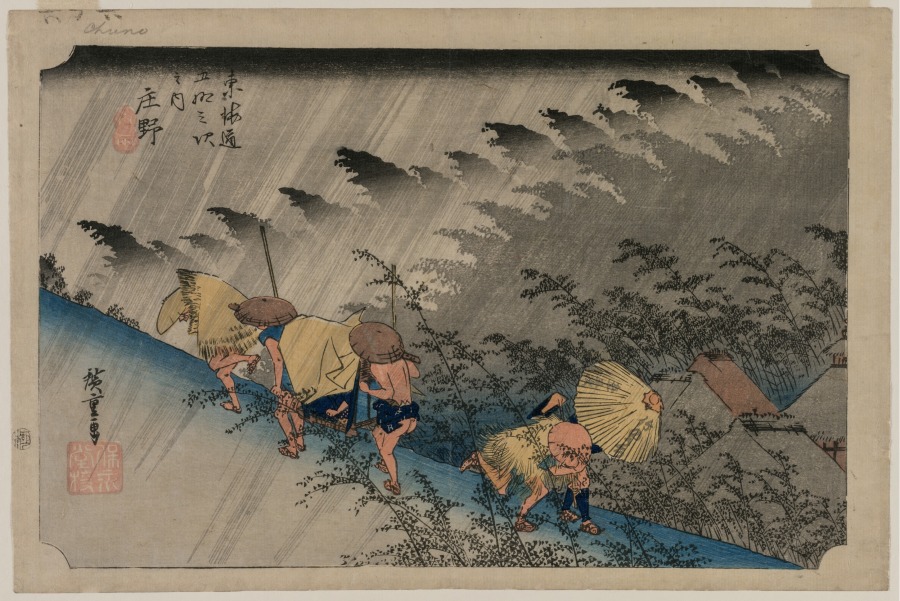 ↗
Utagawa Hiroshige
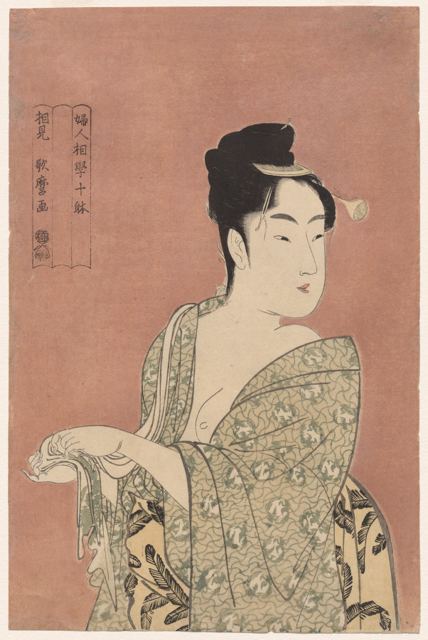 ↗
Kitagawa Utamaro
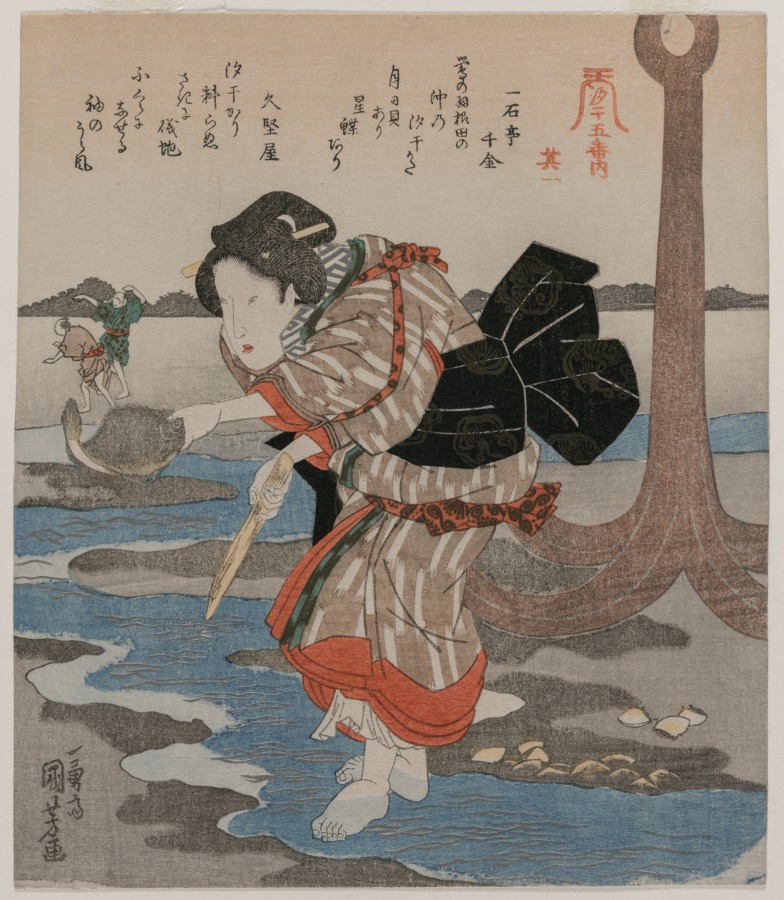 ↗
Utagawa Kuniyoshi