 ↗
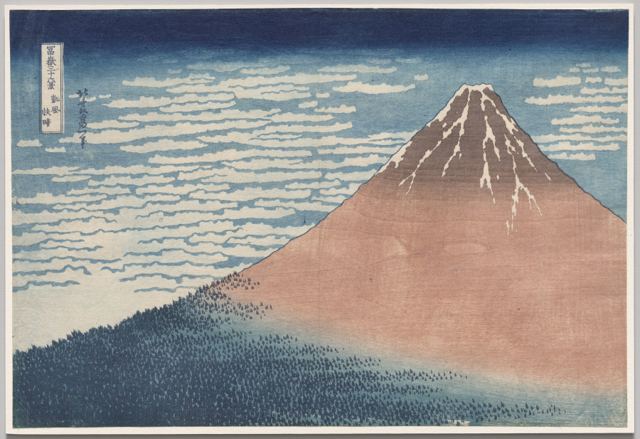
Japan, Edo period (1615–1868) · 1830年代初
凯风快晴,选自《富岳三十六景》
葛饰北斋
Norman O. Stone and Ella A. Stone Memorial Fund · 克利夫兰艺术博物馆
图像许可: CC0 · 图像使用政策 · 博物馆记录与图像来源 ↗
沿孩子的重量看到大人的手臂。还没看脸,一处承重的位置就能把照料关系画出来。
本站观察与练习建议;历史和制作资料见下方来源。
资料依据 The Cleveland Museum of Art ↗
可对照阅读
Kōshirō Onchi was a key figure in the sōsaku-hanga movement. He not only provided essential aesthetic and spiritual leadership, but his aristocratic background made him a forceful advocate of printmaking within the hostile bureaucracy of Japan's hierarchical art world. Onchi admired the nonobjective images of Russian artist Wassily Kandinsky and the Expressionist style of the Norwegian artist Edvard Munch, whose works shared a kinship with his own interests in the expressive power of nonrepresentational and abstracted figural compositions as well as color. Onchi was particularly attracted to the medium of woodcut in which he felt he was forced to simplify his forms and thus intensify the expression of his emotion while cutting, gouging, and scraping the image into the block.
馆藏文字 · 克利夫兰艺术博物馆 · CC0