 ↗
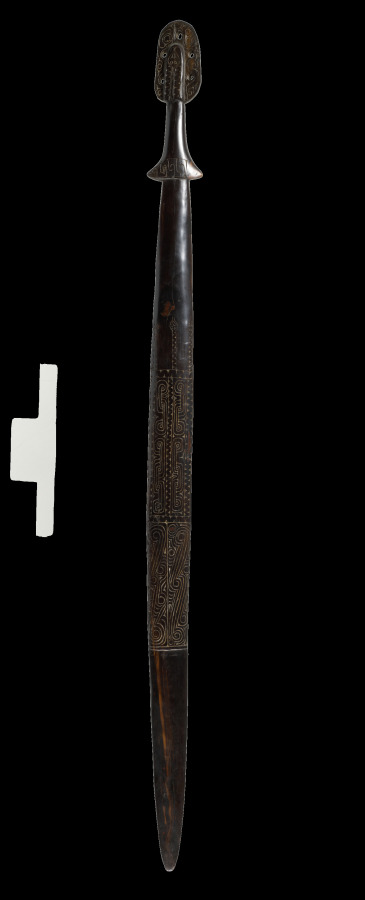
Melanesia, New Guinea, Massim Area, Trobriand Islands, 20th century · 1930年之前
棍棒
作者未记录
The Mary Spedding Milliken Memorial Collection, Gift of William Mathewson Milliken · 克利夫兰艺术博物馆
图像许可: CC0 · 图像使用政策 · 博物馆记录与图像来源 ↗
博物馆未记录创作者
从下方想象悬挂的宝盒。摆桌上时落在底边的装饰,放回屋梁下可能恰好最醒目。
本站观察与练习建议;历史和制作资料见下方来源。
资料依据 The Cleveland Museum of Art ↗
可对照阅读
Decorated with low-relief spiral designs and small carved figures at each end, the treasure box was used to store ornaments worn by chiefs: feathers of the huia bird, combs, and pendants (hei-tiki). Because the heads and necks of high-ranking Maori chiefs were tapu, or sacred, their personal adornments were dangerous to children or individuals of lower rank. Treasure boxes were therefore hung from the rafters of the chief's house. Boxes like this one were in use when Captain Cook visited New Zealand in 1769-70.
馆藏文字 · 克利夫兰艺术博物馆 · CC0这类毛利宝物盒可以悬在屋梁上,里面放珍贵的佩饰。想象你站在下面抬头看,两端的小雕像和朝外的雕纹就变得很重要。设计一件器物时,可以先从使用者实际看它的高度画一遍;摆在桌上好看的那一面,挂起来可能根本看不到。
本站解读 · 目录事实与画面观察
核对博物馆记录 ↗↗作者未记录
 ↗
作者未记录
 ↗
作者未记录
 ↗
作者未记录