 ↗
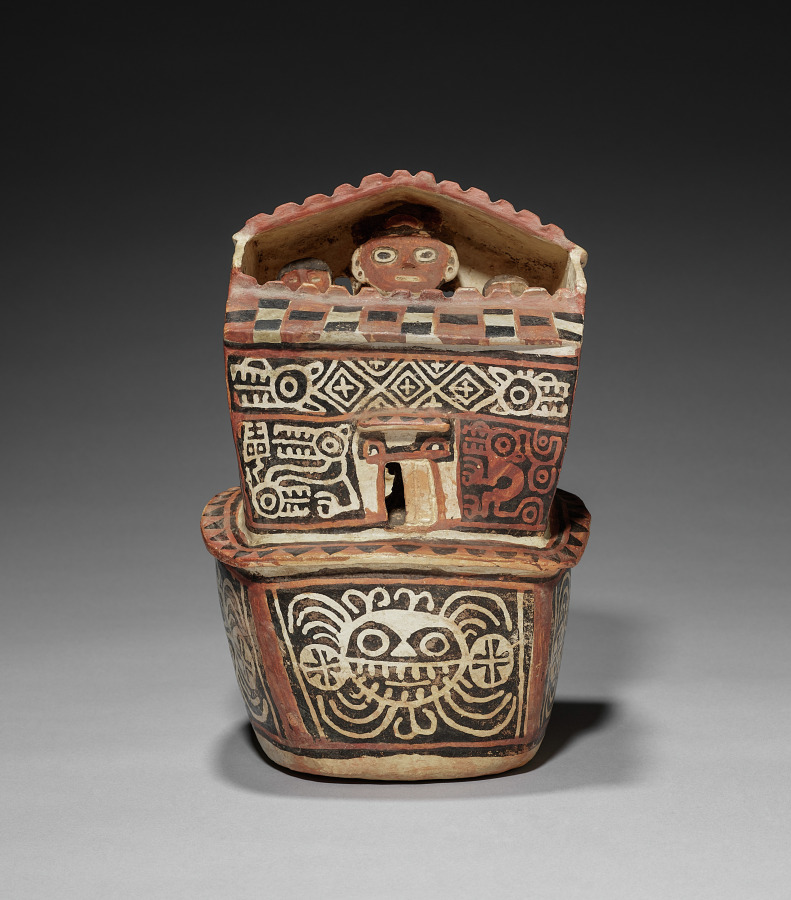
Central Andes (Peru), Recuay people · 公元1—700年
建筑形容器
作者未记录
Andrew R. and Martha Holden Jennings Fund · 克利夫兰艺术博物馆
图像许可: CC0 · 图像使用政策 · 博物馆记录与图像来源 ↗
博物馆未记录创作者
今天看到的是独立陈列的头部。沿底缘看一遍,分清眼前陈列能告诉我们的事,以及原来环境中已难判断的事。
本站观察与练习建议;历史和制作资料见下方来源。
资料依据 The Cleveland Museum of Art ↗
可对照阅读
More than 500 such sculptures—often full figures with elaborate hairstyles and jewelry— have been found in central Nigeria. Named after a discovery site, Nok culture (500 BCE–200 CE or 1500–1 BCE) produced the earliest large figurative artworks in Africa outside of Egypt. Little was known about their social context, as they were first found in mining deposits in the 1920s. Archaeological excavations conducted in the 2000s by a German-Nigerian team suggest that many sculptures were deliberately broken and placed under pavements and in pits, indicating ritual practice. Male-centered art histories presumed men made these figurative sculptures; however, they incorporate building and firing techniques practiced only by women.
馆藏文字 · 克利夫兰艺术博物馆 · CC0