 ↗
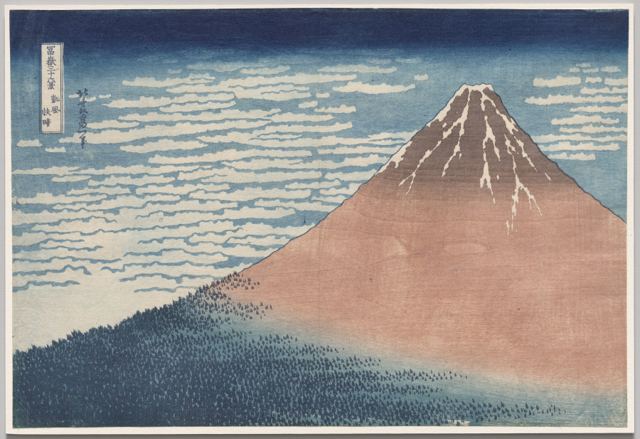
Japan, Edo period (1615–1868) · 1830年代初
凯风快晴,选自《富岳三十六景》
葛饰北斋
#303533#B99962#AD8D57#EBEAE6#C6A974#767B53根据博物馆图像中的六组色彩估算,包含可见纸张或边框。复制方式和光照会影响结果;这里显示的是图像面积占比,而非颜料用量。
Gift of the Hanna Fund · 克利夫兰艺术博物馆
图像许可: CC0 · 图像使用政策 · 博物馆记录与图像来源 ↗
想象让屏风从平展变成有一道折。画里的溪水路线不变,金地的反光却能另起一层节奏。
本站观察与练习建议;历史和制作资料见下方来源。
资料依据 The Cleveland Museum of Art ↗
可对照阅读
These screens recall a painting style so closely identified with Ogata Kōrin (1658–1716) that it is called Rinpa, or “Rin School,” after the ideograph “rin” in his name. The highly stylized background accentuates floral groupings that have been groomed so as to appear utterly artificial, like the synthetic arrangements available today. Kōrin's genius derived in large measure from natural phenomena painstakingly observed and then manipulated to create compositions of startling refinement and sparkling isolation. This process may have grown out of Kōrin's early immersion in the family textile business, a medium that encourages such dramatic distillations of form: the stream's gold-crested waves bring to mind traditional kimono robe designs of Kōrin's era. Works with the signature seen on this painting, including a style name, or persona suggested to Kōrin by his brother Kenzan (1663–1743), are sometimes considered to have been produced either in the last year of his life, when he was very ill, or after his death. In both scenarios, the lion’s share of the work would have been done by studio assistants, but little is truly known of his studio practice. Given the regularity of the gold waves on the stream, and the tension in the arrangement of the chrysanthemums, it is also possible that the screens were made in emulation of Kōrin's designs by a later artist.
馆藏文字 · 克利夫兰艺术博物馆 · CC0屏风是可以折的。想象把菊花屏折成浅浅的之字:一扇金地迎光,相邻一扇背光。花没有动,背景却会随房间的光改变。想看懂琳派在这件作品里的特点,数完花瓣,也可以看看花丛之间特意空出来的那一段金地。
本站解读 · 目录事实与画面观察
核对博物馆记录 ↗