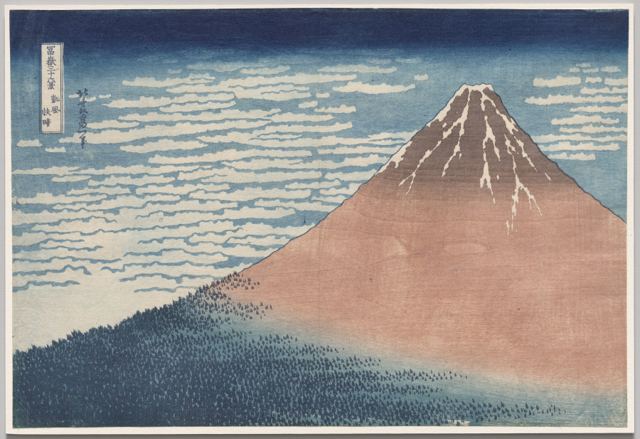
 ↗
Japan, Edo period (1615–1868) · early 1830s
South Wind, Clear Sky, from Thirty-Six Views of Mount Fuji
Katsushika Hokusai
#303533#B99962#AD8D57#EBEAE6#C6A974#767B53Estimated from six colour groups in the museum image, including visible paper or borders. Reproduction and lighting affect the result; these are image-area proportions, not pigment measurements.
Gift of the Hanna Fund · The Cleveland Museum of Art
Image licence: CC0 · Image policy · Museum record & image source ↗
Flatten the screen in your imagination and then give it one fold. The painted stream holds its course, but reflected light can create a second rhythm across the gold.
Site interpretation and practical exercises. Historical and technical evidence is linked below.
Sources for context The Cleveland Museum of Art ↗
Read alongside
These screens recall a painting style so closely identified with Ogata Kōrin (1658–1716) that it is called Rinpa, or “Rin School,” after the ideograph “rin” in his name. The highly stylized background accentuates floral groupings that have been groomed so as to appear utterly artificial, like the synthetic arrangements available today. Kōrin's genius derived in large measure from natural phenomena painstakingly observed and then manipulated to create compositions of startling refinement and sparkling isolation. This process may have grown out of Kōrin's early immersion in the family textile business, a medium that encourages such dramatic distillations of form: the stream's gold-crested waves bring to mind traditional kimono robe designs of Kōrin's era. Works with the signature seen on this painting, including a style name, or persona suggested to Kōrin by his brother Kenzan (1663–1743), are sometimes considered to have been produced either in the last year of his life, when he was very ill, or after his death. In both scenarios, the lion’s share of the work would have been done by studio assistants, but little is truly known of his studio practice. Given the regularity of the gold waves on the stream, and the tension in the arrangement of the chrysanthemums, it is also possible that the screens were made in emulation of Kōrin's designs by a later artist.
Collection text · The Cleveland Museum of Art · CC0A screen can bend. Imagine folding these chrysanthemums into a shallow zigzag: one gold panel catches the light while its neighbour turns away. The painted flowers stay still, but their background changes with the room. When looking for the Rinpa character of this work, pay as much attention to the spaces between the clusters as to the petals.
Site study note · catalogue facts and visual interpretation
Check the museum record ↗↗Katsushika Hokusai
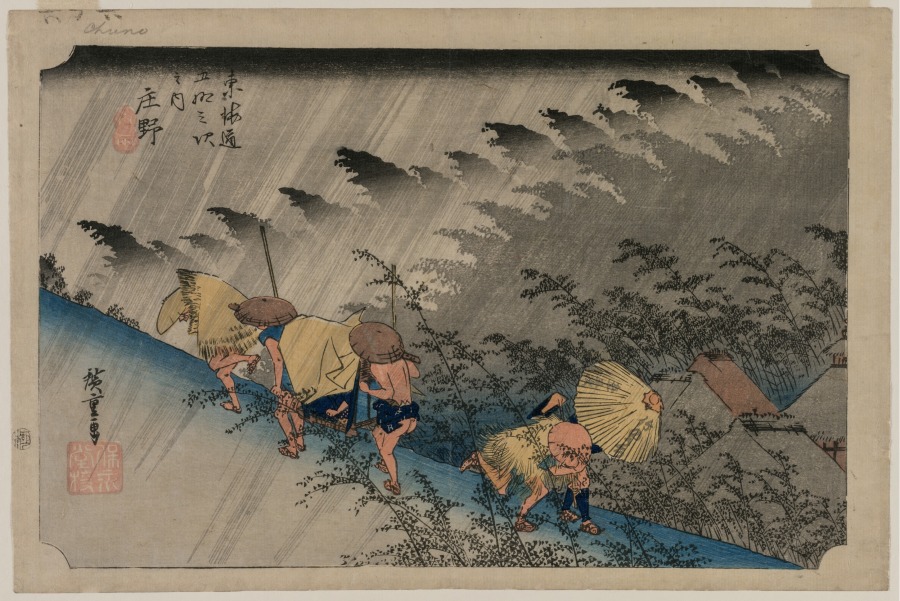 ↗
Utagawa Hiroshige
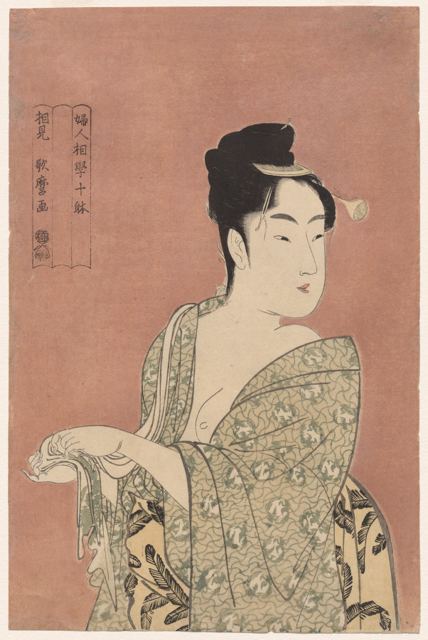 ↗
Kitagawa Utamaro
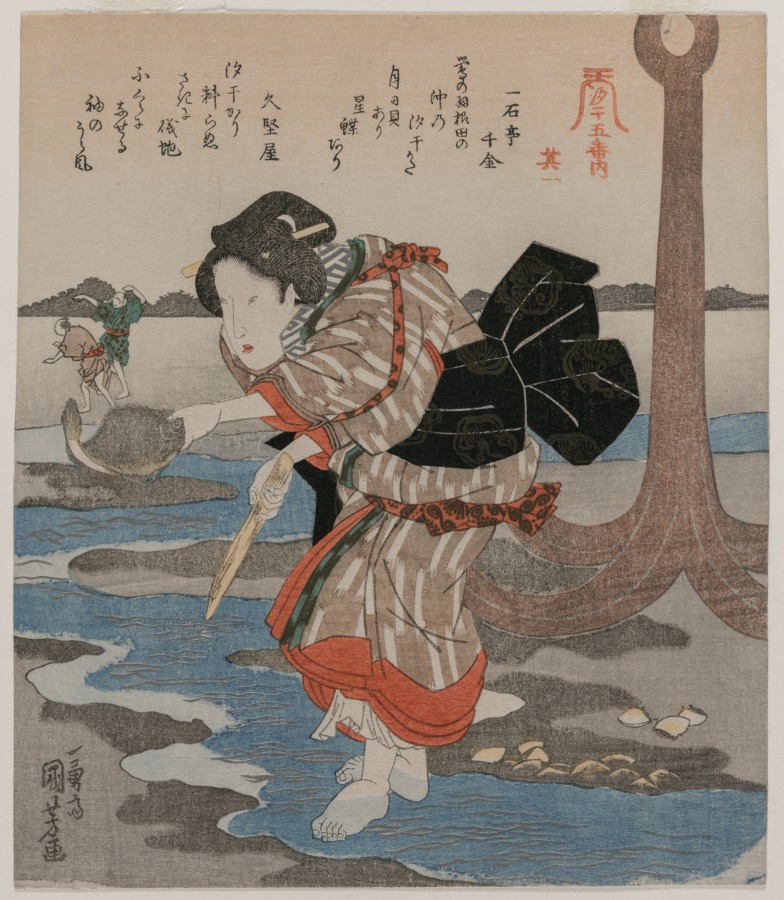 ↗
Utagawa Kuniyoshi