 ↗
China, Ming dynasty (1368–1644) · 1490年之后
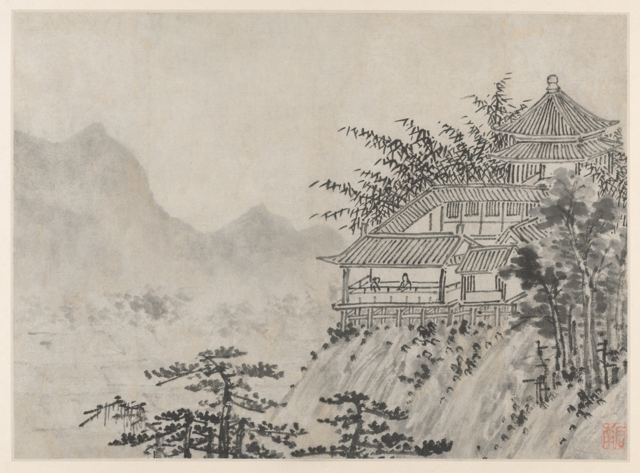
千顷云,选自《苏州虎丘十二景》
沈周
#705B43#735E45#52463A#64533F#6C5840#A6937B根据博物馆图像中的六组色彩估算,包含可见纸张或边框。复制方式和光照会影响结果;这里显示的是图像面积占比,而非颜料用量。
John L. Severance Fund · 克利夫兰艺术博物馆
图像许可: CC0 · 图像使用政策 · 博物馆记录与图像来源 ↗
比较竹竿一气弯下去的线和竹叶急转的笔。用两种笔迹画同一阵风,不添一根表示风的线。
本站观察与练习建议;历史和制作资料见下方来源。
资料依据 The Cleveland Museum of Art ↗
可对照阅读
Bamboo is an evergreen plant that does not break under the weight of snow or the force of the wind, and thus became a favorite motif in literati painting and Chan Buddhism as a metaphor for the virtue of not yielding to worldly temptations. Xuechuang, also known as monk Puming, was a native of Songjiang, near Shanghai, who spent his life as a monk in Suzhou. In 1338, he presided over Yunyan temple on Tiger Hill. Here, he masterfully depicts a bamboo gently bent in a subtle breeze. Puming’s paintings were revered in Japan and Korea.
馆藏文字 · 克利夫兰艺术博物馆 · CC0风本身没有形状,普明画的是能把风力留下来的竹。顺着竹竿看到弯折处,再看叶子偏出去多少。竹子常用来比喻有操守的人,这层意思在这里看得见:弯了,仍然立着。自己画风时,可以试一次不画风线,只画东西怎样承受风。
本站解读 · 目录事实与画面观察
核对博物馆记录 ↗