 ↗
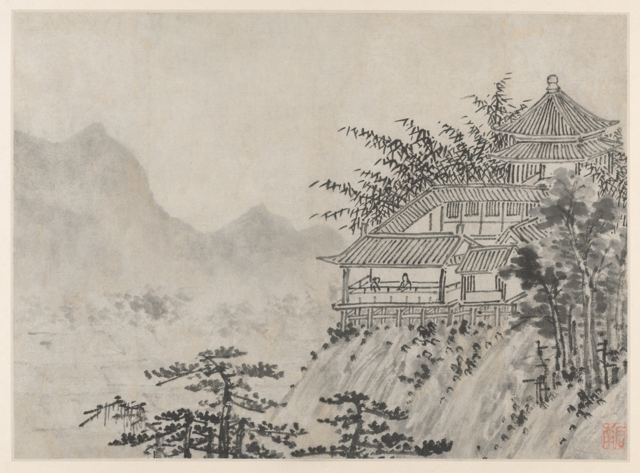
China, Ming dynasty (1368–1644) · 1490年之后
千顷云,选自《苏州虎丘十二景》
沈周
#CABAA1#CBC0AD#CFC4B0#AF9D86#D4C9B6#C3B7A4根据博物馆图像中的六组色彩估算,包含可见纸张或边框。复制方式和光照会影响结果;这里显示的是图像面积占比,而非颜料用量。
Purchase from the J. H. Wade Fund · 克利夫兰艺术博物馆
图像许可: CC0 · 图像使用政策 · 博物馆记录与图像来源 ↗
治眼的故事可以靠手与眼的距离读出来。不画表情,只画两人的接触,还能不能看出正在医治?
本站观察与练习建议;历史和制作资料见下方来源。
资料依据 The Cleveland Museum of Art ↗
可对照阅读
This drawing is a prime example of the Dutch painter Rembrandt van Rijn's innovative approach to biblical narrative, in which he often humanized traditional pictorial formulas through the inclusion of observed details from everyday life. It depicts the climactic moment of the Book of Tobit, an apocryphal book of the Old Testament, in which, instructed by the archangel Raphael, Tobias heals his father Tobit's blindness by rubbing his eyes with fish gall. With spontaneity, a deft hand, and deceptive simplicity in his mark-making, Rembrandt depicts an intimate family scene including the archangel, Tobias, Hannah, and Sarah around a seated Tobit. Hannah’s spectacles, a unique detail among images of the scene created by Rembrandt and his circle, further thematizes sight. Rembrandt’s most innovative addition to the story centers on Tobias, who concentrates intensely to use a scalpel, rather than fish gall, to perform a cataract operation on his father’s left eye. Cataract surgery was a new procedure pioneered in Amsterdam in 1635 by Dr. Job Janszoon van Meekren, and Rembrandt may have witnessed the doctor perform it.
馆藏文字 · 克利夫兰艺术博物馆 · CC0