 ↗
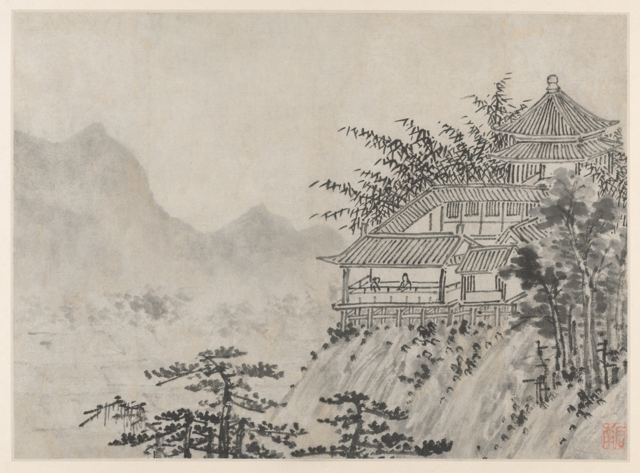
China, Ming dynasty (1368–1644) · after 1490
The Thousand Acres of Clouds, from Twelve Views of Tiger Hill, Suzhou
Shen Zhou
#CABAA1#CBC0AD#CFC4B0#AF9D86#D4C9B6#C3B7A4Estimated from six colour groups in the museum image, including visible paper or borders. Reproduction and lighting affect the result; these are image-area proportions, not pigment measurements.
Purchase from the J. H. Wade Fund · The Cleveland Museum of Art
Image licence: CC0 · Image policy · Museum record & image source ↗
Healing becomes visible in the closeness of hands to eyes. Try drawing the scene without facial expressions and see whether touch alone tells the story.
Site interpretation and practical exercises. Historical and technical evidence is linked below.
Sources for context The Cleveland Museum of Art ↗
Read alongside
This drawing is a prime example of the Dutch painter Rembrandt van Rijn's innovative approach to biblical narrative, in which he often humanized traditional pictorial formulas through the inclusion of observed details from everyday life. It depicts the climactic moment of the Book of Tobit, an apocryphal book of the Old Testament, in which, instructed by the archangel Raphael, Tobias heals his father Tobit's blindness by rubbing his eyes with fish gall. With spontaneity, a deft hand, and deceptive simplicity in his mark-making, Rembrandt depicts an intimate family scene including the archangel, Tobias, Hannah, and Sarah around a seated Tobit. Hannah’s spectacles, a unique detail among images of the scene created by Rembrandt and his circle, further thematizes sight. Rembrandt’s most innovative addition to the story centers on Tobias, who concentrates intensely to use a scalpel, rather than fish gall, to perform a cataract operation on his father’s left eye. Cataract surgery was a new procedure pioneered in Amsterdam in 1635 by Dr. Job Janszoon van Meekren, and Rembrandt may have witnessed the doctor perform it.
Collection text · The Cleveland Museum of Art · CC0↗Shen Zhou
 ↗
Shitao
 ↗
Wen Zhengming
 ↗
Tang Yin