 ↗
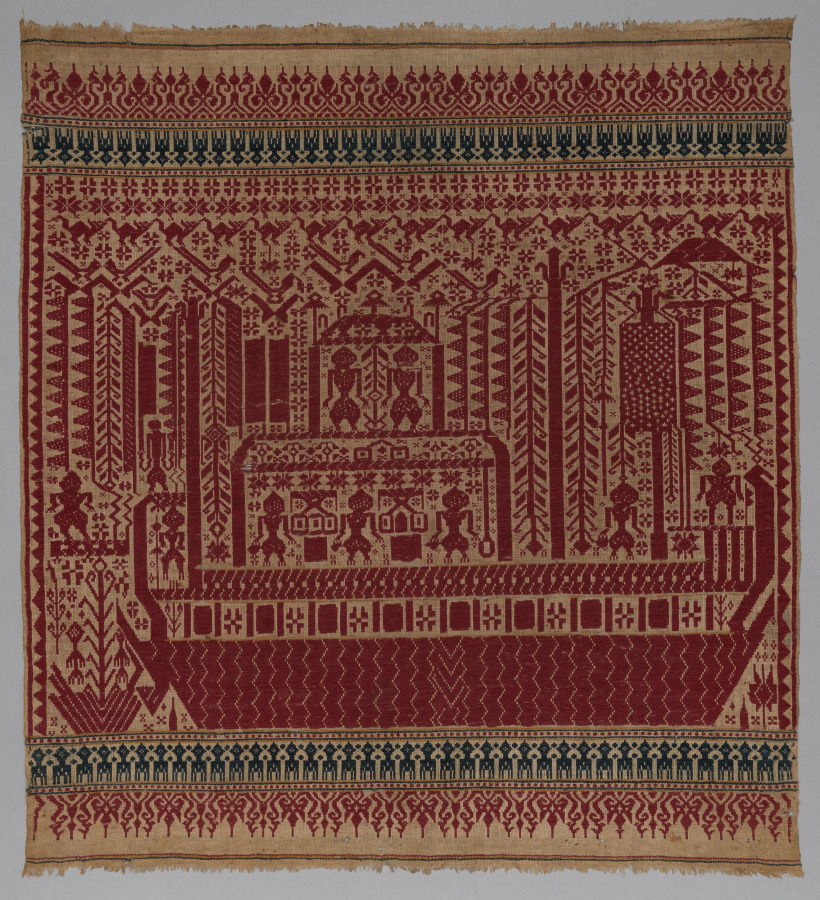
Indonesia, Sumatra, Lampung, 19th century · 19世纪
坦潘沿海船纹织物
作者未记录
John L. Severance Fund · 克利夫兰艺术博物馆
图像许可: CC0 · 图像使用政策 · 博物馆记录与图像来源 ↗
博物馆未记录创作者
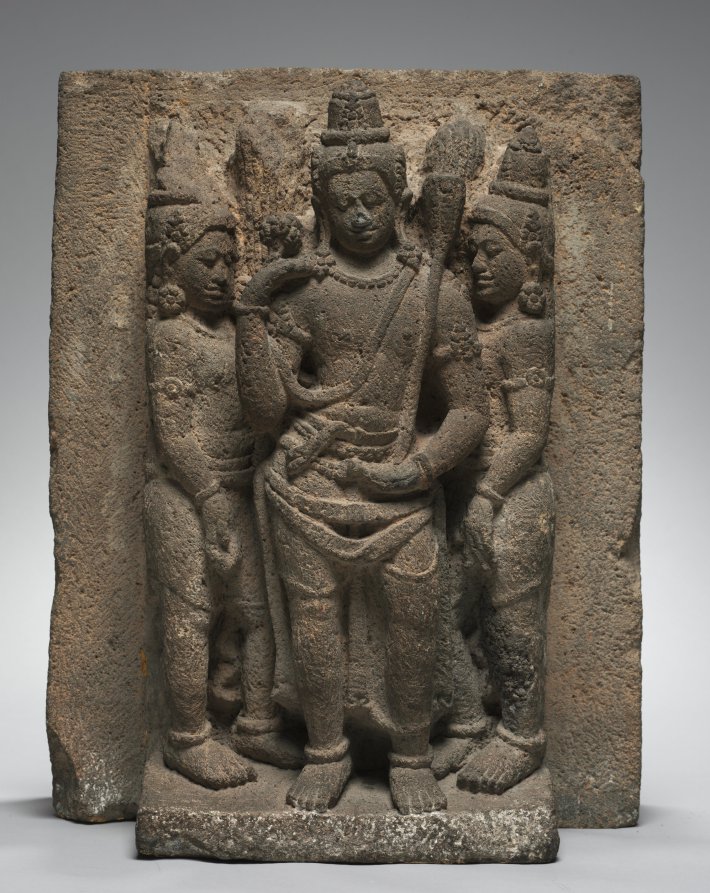
饰板上的神像只能占用有限深度。哪些细节靠凸起看清,哪些得靠表面刻线补足?
本站观察与练习建议;历史和制作资料见下方来源。
资料依据 The Cleveland Museum of Art ↗
可对照阅读
Images made in India during the Gupta period (AD 300s to 600s) were influential in shaping the early development of Buddhist and Hindu art in Southeast Asia. This gold token depicts the Hindu god Vishnu, identified by the flat-topped crown, his four arms, and attributes: wheel, conch shell, club, and clod of earth. Noteworthy for its naturalism is the foreshortening of his right foot. Such precious gold objects were made to be secreted under a sacred stone icon in Thailand or Cambodia to infuse the temple with wealth and glory.
馆藏文字 · 克利夫兰艺术博物馆 · CC0