 ↗
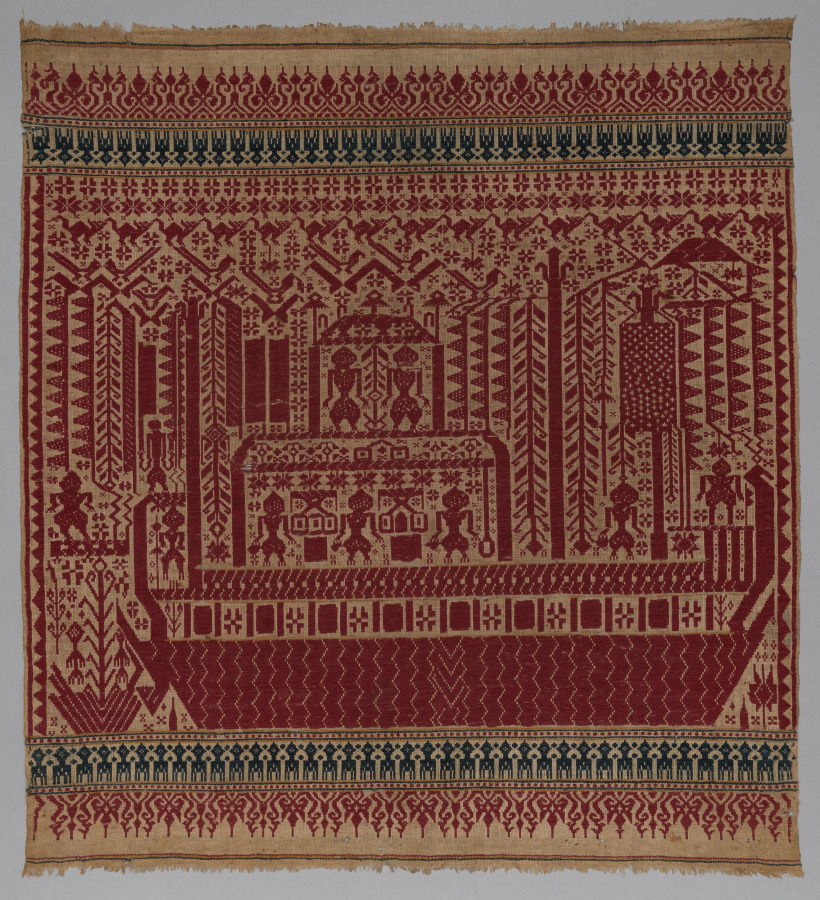
Indonesia, Sumatra, Lampung, 19th century · 1800s
Tampan Pasisir (Ship Cloth)
Creator not recorded
John L. Severance Fund · The Cleveland Museum of Art
Image licence: CC0 · Image policy · Museum record & image source ↗
Creator not recorded by the museum
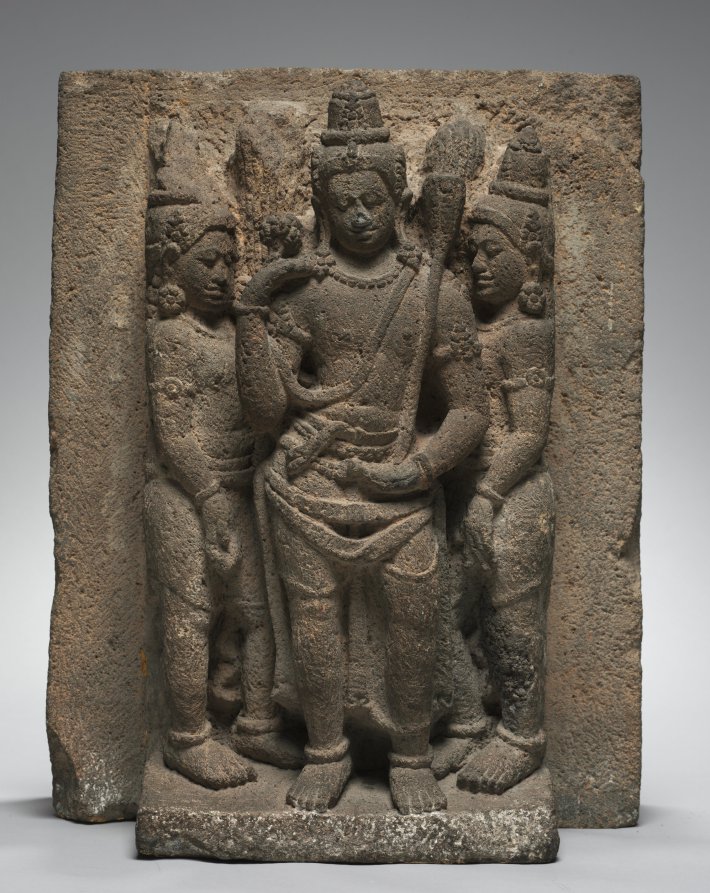
A plaque asks a divine figure to occupy shallow depth. Identify which details are legible through projection and which have to be supplied by a line on the surface.
Site interpretation and practical exercises. Historical and technical evidence is linked below.
Sources for context The Cleveland Museum of Art ↗
Read alongside
Images made in India during the Gupta period (AD 300s to 600s) were influential in shaping the early development of Buddhist and Hindu art in Southeast Asia. This gold token depicts the Hindu god Vishnu, identified by the flat-topped crown, his four arms, and attributes: wheel, conch shell, club, and clod of earth. Noteworthy for its naturalism is the foreshortening of his right foot. Such precious gold objects were made to be secreted under a sacred stone icon in Thailand or Cambodia to infuse the temple with wealth and glory.
Collection text · The Cleveland Museum of Art · CC0↗Creator not recorded
 ↗
Creator not recorded
 ↗
Creator not recorded
 ↗
Creator not recorded