 ↗
China, Ming dynasty (1368–1644) · 1490年之后
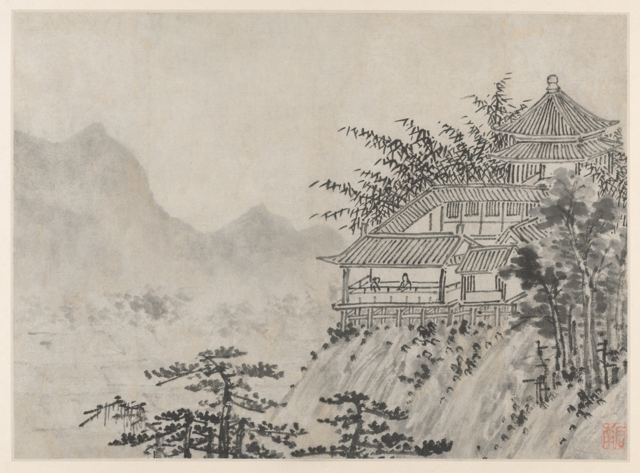
千顷云,选自《苏州虎丘十二景》
沈周
#D3C8B5#D5CBB8#9F9383#C7BBA9#D0C4B2#E3D9C3根据博物馆图像中的六组色彩估算,包含可见纸张或边框。复制方式和光照会影响结果;这里显示的是图像面积占比,而非颜料用量。
Bequest of Mrs. A. Dean Perry · 克利夫兰艺术博物馆
图像许可: CC0 · 图像使用政策 · 博物馆记录与图像来源 ↗
冬树露出骨架。沿一个枝杈再看到一道分开的水流,两种分叉可以呼应,却不必画成同一种线。
本站观察与练习建议;历史和制作资料见下方来源。
资料依据 The Cleveland Museum of Art ↗
可对照阅读
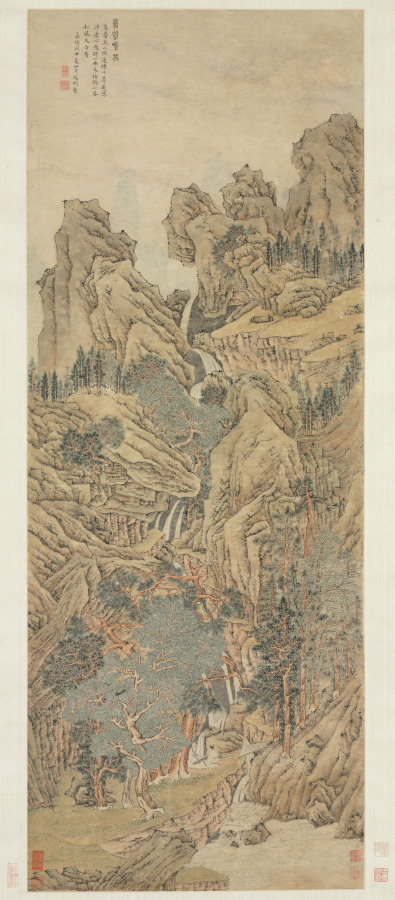
Wen Zhengming was one of the most celebrated calligraphers and painters during the Ming dynasty (1368–1644). His inscription, gracefully written in small characters on the upper left corner, reveals Wen’s emotional mood at that moment of creation. "In the fifteenth day of the fifth month, the year of xinhai [1551], [I], Zhengming, playfully write this Old Trees by a Wintry Brook at eighty-two [sui]." How should we understand a wintery landscape painted in the middle of spring? Was it simply inspired by a surprisingly late spring snow? Or can it be that the “wintery” brook reflects the octogenarian’s feelings about aging and his inevitable, approaching mortality? The junipers’ gnarled forms are a poignant symbol of aging and suffering, yet the ink-dot leaves on some branches suggest that the trees are still alive, awaiting the warmth of spring.
馆藏文字 · 克利夫兰艺术博物馆 · CC0