 ↗
China, Ming dynasty (1368–1644) · after 1490
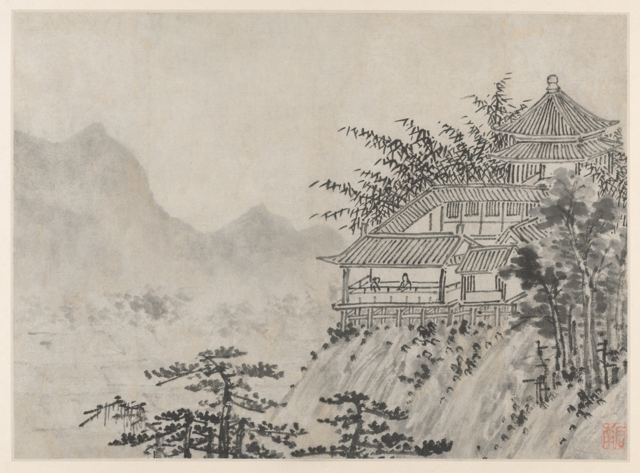
The Thousand Acres of Clouds, from Twelve Views of Tiger Hill, Suzhou
Shen Zhou
#D3C8B5#D5CBB8#9F9383#C7BBA9#D0C4B2#E3D9C3Estimated from six colour groups in the museum image, including visible paper or borders. Reproduction and lighting affect the result; these are image-area proportions, not pigment measurements.
Bequest of Mrs. A. Dean Perry · The Cleveland Museum of Art
Image licence: CC0 · Image policy · Museum record & image source ↗
Wintry trees lay their structure bare. Follow a fork in the wood and compare it with a division in the brook; two branching systems can echo without merging.
Site interpretation and practical exercises. Historical and technical evidence is linked below.
Sources for context The Cleveland Museum of Art ↗
Read alongside
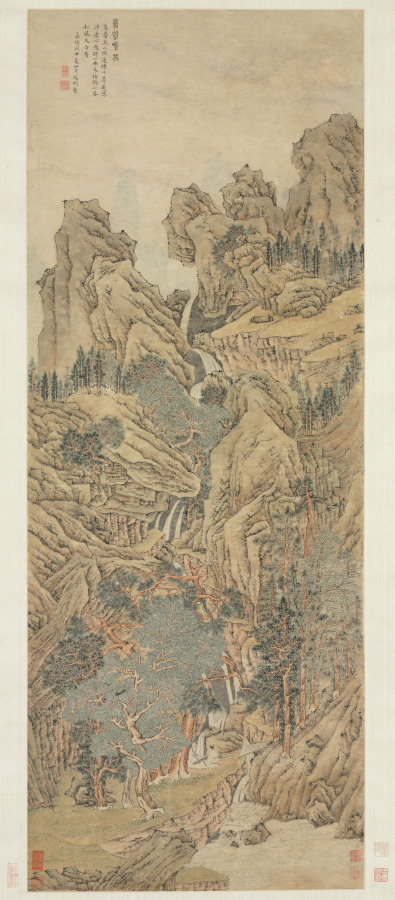
Wen Zhengming was one of the most celebrated calligraphers and painters during the Ming dynasty (1368–1644). His inscription, gracefully written in small characters on the upper left corner, reveals Wen’s emotional mood at that moment of creation. "In the fifteenth day of the fifth month, the year of xinhai [1551], [I], Zhengming, playfully write this Old Trees by a Wintry Brook at eighty-two [sui]." How should we understand a wintery landscape painted in the middle of spring? Was it simply inspired by a surprisingly late spring snow? Or can it be that the “wintery” brook reflects the octogenarian’s feelings about aging and his inevitable, approaching mortality? The junipers’ gnarled forms are a poignant symbol of aging and suffering, yet the ink-dot leaves on some branches suggest that the trees are still alive, awaiting the warmth of spring.
Collection text · The Cleveland Museum of Art · CC0↗Shen Zhou
 ↗
Shitao
 ↗
Wen Zhengming
 ↗
Tang Yin