 ↗
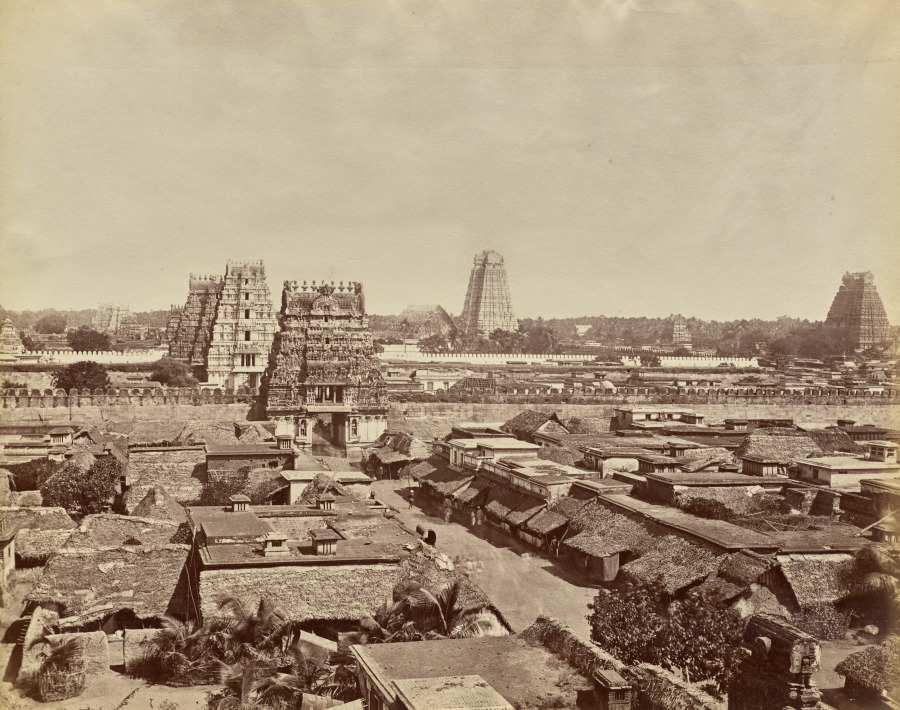
印度 · 1878
从岩顶俯瞰印度特里奇诺波利城镇
尼古拉斯摄影公司
#6B504E#C2A362#CCC4B0#A77E58#C3B998#77786A根据博物馆图像中的六组色彩估算,包含可见纸张或边框。复制方式和光照会影响结果;这里显示的是图像面积占比,而非颜料用量。
Edward L. Whittemore Fund · 克利夫兰艺术博物馆
图像许可: CC0 · 图像使用政策 · 博物馆记录与图像来源 ↗
博物馆未记录创作者
拉格画给音乐调式一个可见场景。找一处重复或停顿,试着不用题材名称,只用时长和节奏来描述。
本站观察与练习建议;历史和制作资料见下方来源。
资料依据 The Cleveland Museum of Art ↗
可对照阅读
This painting is from an important series made at a turning point in the history of court painting at the Rajput kingdom of Mewar. For the first time, a royal patron, Amar Singh II (r. 1698–1710), even before his accession to the throne, decided to incorporate Mughal elements into secular art, as seen in the white domed architecture and interest in conveying some sense of spatial depth. Nevertheless, the artist still adheres to the use of horizontal registers and bold planes of color. The codified iconography of Shri Raga involves a royal couple listening to recitations. Shri Raga is described as: "Splendidly enthroned of peerless beauty and lovely as the autumn moon, he sits hearing stories from Narada and Tumburu. By the great sages he is called Shri Raga King." Amar Singh has playfully substituted his own portrait for that of the generic king, and a woman for that of the sage. In music, Shri Raga is associated with the season of autumn and the harvest festivals, here evoked by the dancing female musicians in the lower register.
馆藏文字 · 克利夫兰艺术博物馆 · CC0