 ↗
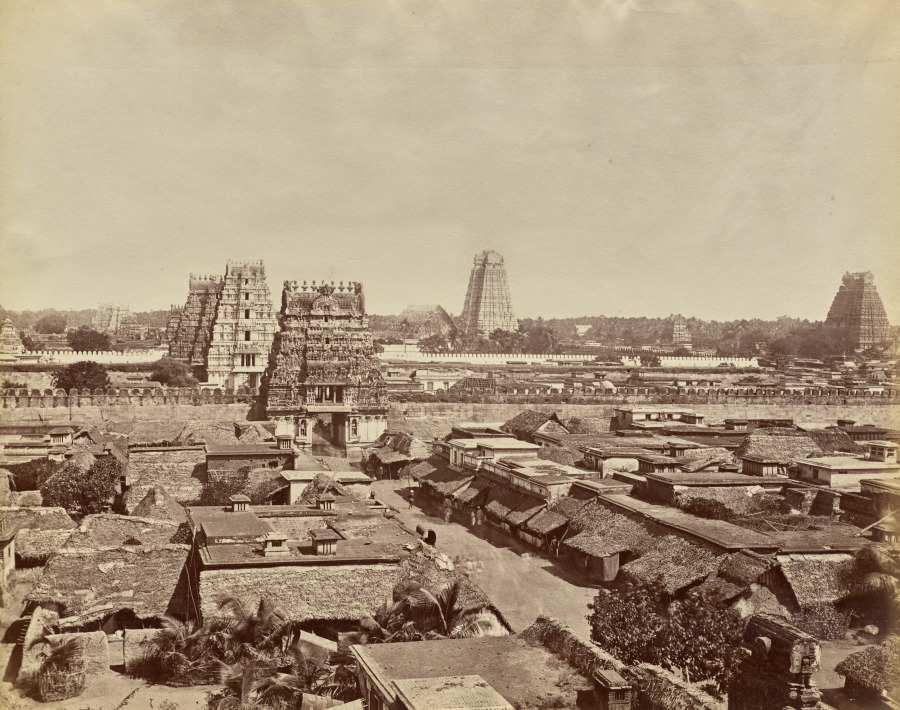
India · 1878
View from the Top of the Rock, looking over the native Town, Trichinopoly, India
Nicholas & Co.
#6B504E#C2A362#CCC4B0#A77E58#C3B998#77786AEstimated from six colour groups in the museum image, including visible paper or borders. Reproduction and lighting affect the result; these are image-area proportions, not pigment measurements.
Edward L. Whittemore Fund · The Cleveland Museum of Art
Image licence: CC0 · Image policy · Museum record & image source ↗
Creator not recorded by the museum
A raga painting offers an image for a musical mode. Find a repeat or a pause that you can describe in terms of timing rather than subject matter.
Site interpretation and practical exercises. Historical and technical evidence is linked below.
Sources for context The Cleveland Museum of Art ↗
Read alongside
This painting is from an important series made at a turning point in the history of court painting at the Rajput kingdom of Mewar. For the first time, a royal patron, Amar Singh II (r. 1698–1710), even before his accession to the throne, decided to incorporate Mughal elements into secular art, as seen in the white domed architecture and interest in conveying some sense of spatial depth. Nevertheless, the artist still adheres to the use of horizontal registers and bold planes of color. The codified iconography of Shri Raga involves a royal couple listening to recitations. Shri Raga is described as: "Splendidly enthroned of peerless beauty and lovely as the autumn moon, he sits hearing stories from Narada and Tumburu. By the great sages he is called Shri Raga King." Amar Singh has playfully substituted his own portrait for that of the generic king, and a woman for that of the sage. In music, Shri Raga is associated with the season of autumn and the harvest festivals, here evoked by the dancing female musicians in the lower register.
Collection text · The Cleveland Museum of Art · CC0↗Nicholas & Co.
 ↗
Creator not recorded
 ↗
Bourne & Shepherd
 ↗
Creator not recorded