 ↗
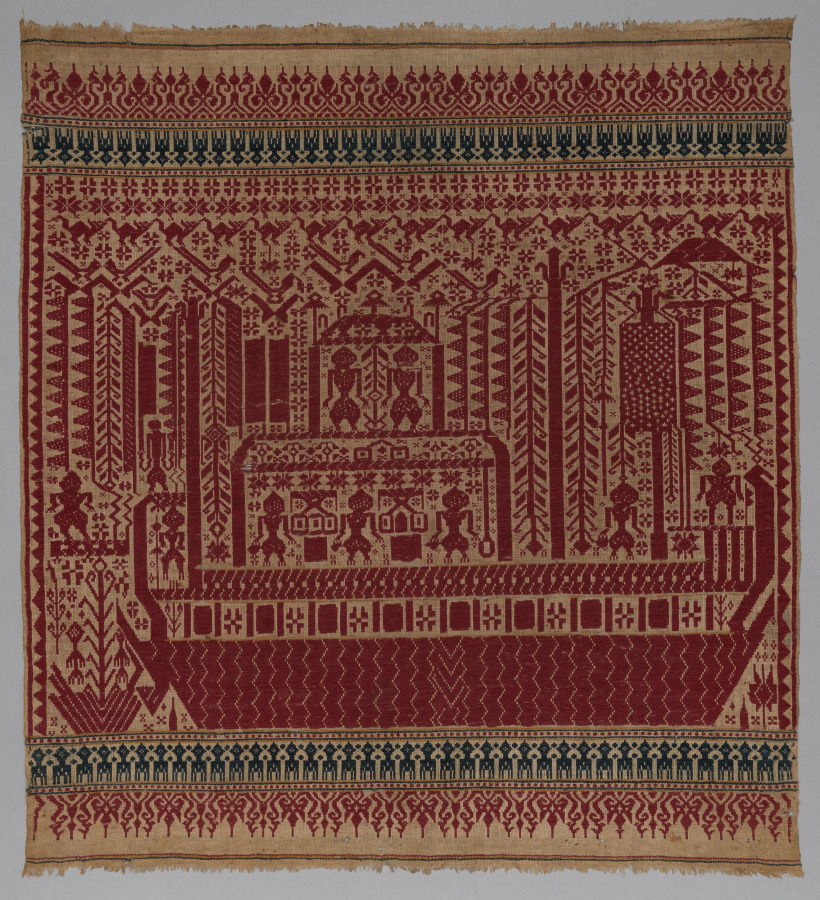
Indonesia, Sumatra, Lampung, 19th century · 19世纪
坦潘沿海船纹织物
作者未记录
Gift of Mrs. James J. Tracy · 克利夫兰艺术博物馆
图像许可: CC0 · 图像使用政策 · 博物馆记录与图像来源 ↗
博物馆未记录创作者
纱笼穿上身后呈环形。把纸样左右两边接起来,看平面纹样在哪里与自身相遇。
本站观察与练习建议;历史和制作资料见下方来源。
资料依据 The Cleveland Museum of Art ↗
可对照阅读
Batiks made in the North Coast region of Java, specifically in Pekalongan, were influenced by both Indian and European motifs due to the Dutch presence in Indonesia. In this sarong we see a mixture of Indian and European flowers including jasmine, lilac, and daffodil. Batik is a wax-resist dyeing technique used throughout Java. Hot wax is applied with a tool known as a canting and a design is hand drawn with incredible skill. This sarong was then dyed with indigo, a well sought after and culturally important natural dye. Areas on the fabric with wax will not accept the indigo dye, hence the term wax-resist.
馆藏文字 · 克利夫兰艺术博物馆 · CC0