 ↗
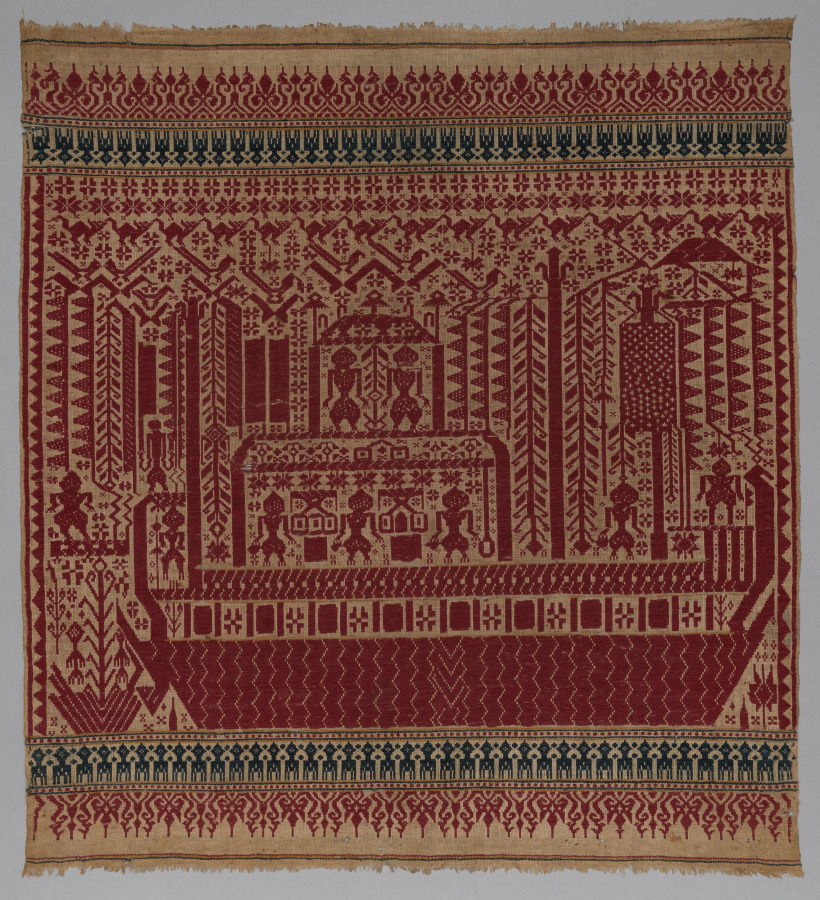
Indonesia, Sumatra, Lampung, 19th century · 19世纪
坦潘沿海船纹织物
作者未记录
Dudley P. Allen Fund · 克利夫兰艺术博物馆
图像许可: CC0 · 图像使用政策 · 博物馆记录与图像来源 ↗
博物馆未记录创作者
这类苏门答腊织物把经线絣染和刺绣放在一起。织之前就安排好的纹,与在布面补上的纹,同一块布上能看出两种制作次序。
衣褶会不断改变纹样。选塔皮斯裙上的一条纹带,想象穿戴者坐下或行走,哪些部分仍保持可辨?
本站观察与练习建议;历史和制作资料见下方来源。
资料依据 The Cleveland Museum of Art ↗
可对照阅读
"Tapis" from central and southern Sumatra combine warp ikat with embroidery. The angular, geometric designs of the warp ikat can be traced back to the bronze age culture of China. During the first millennium B.C., elements of that culture spread to Indonesia where they survived in remote areas well into the 20th century. Completely different are the mysterious, curvilinear forms of the embroidered bands. Some of these have become too abstracted to identitfy; but others can be recognized as human figures wearing the feathered and horned headdresses of head-hunting rituals. Embroidery designs were presented by a man to his prospective bride, and their motifs were inspired by activities specifically performed by men, such as wood carving, metalwork, and headhunting.
馆藏文字 · 克利夫兰艺术博物馆 · CC0