↗
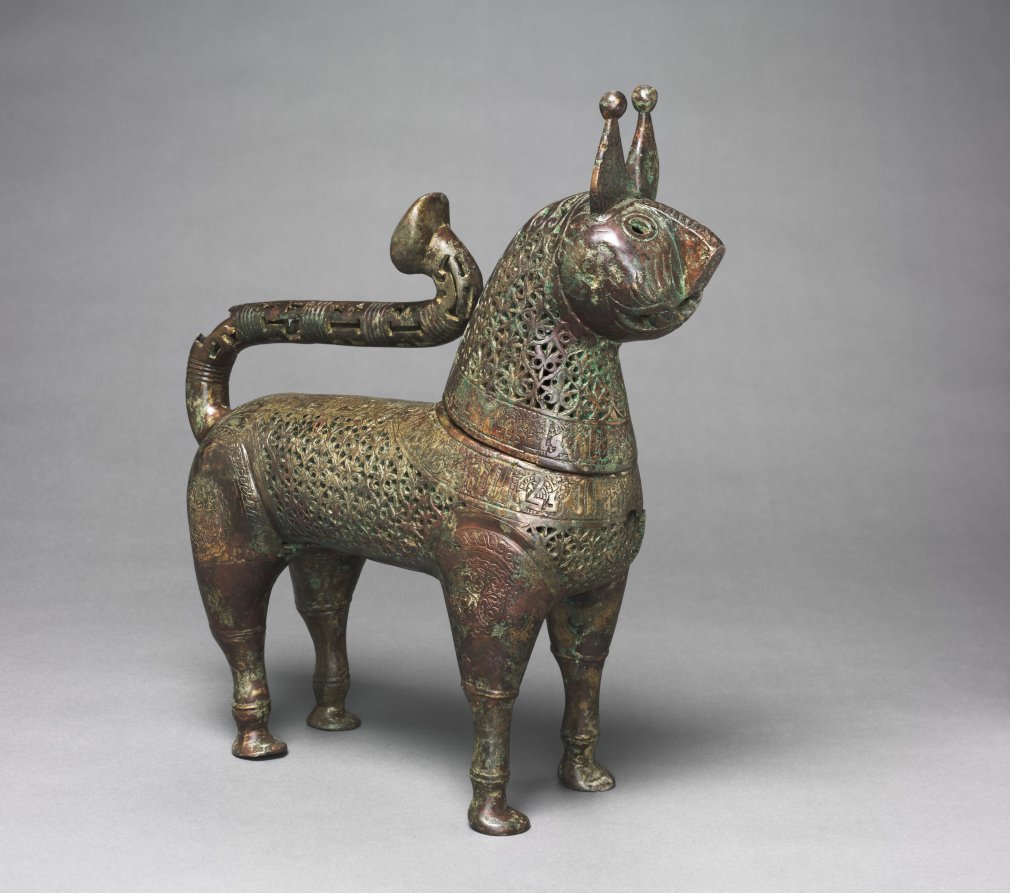
Iran, Seljuq period of Iran (1037–1194) · 1200–1221
饰拟人化文字的韦德杯
作者未记录
Purchase from the J. H. Wade Fund · 克利夫兰艺术博物馆
图像许可: CC0 · 图像使用政策 · 博物馆记录与图像来源 ↗
博物馆未记录创作者
马具颊饰把动物形象放在运动的装备上。静置时能细读的内容,骑行中又有哪些只能一闪而过?
本站观察与练习建议;历史和制作资料见下方来源。
资料依据 The Cleveland Museum of Art ↗
可对照阅读
In this cast bronze cheekpiece, a horned male figure with sidelocks grabs two winged felines by their forelegs. Each feline tramples a rabbit beneath its feet. This design is an ancient Near Eastern motif known as the Master of Animals. Incised chevrons, lines, and crosses decorate the master and the winged felines. A ring penetrating the male figure’s torso provides a means of attachment for a metal horse bit, now missing, and a second cheekpiece, likely nearly identical. This work likely originates from Luristan, a region in northwestern Iran known for its metalworking and horse-breeding in the Iron Age.
馆藏文字 · 克利夫兰艺术博物馆 · CC0