 ↗
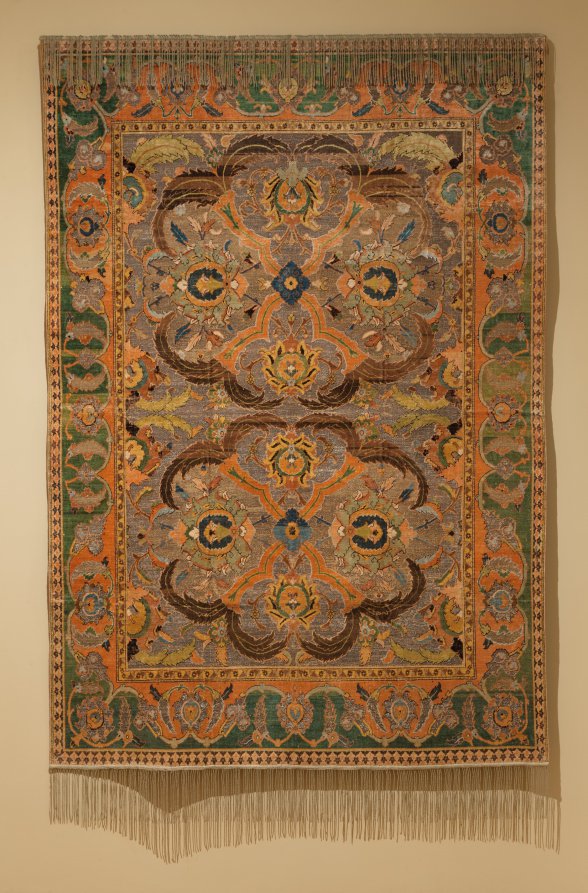
Iran, Isfahan, Safavid period (1501-1722) · 1600–1625
丝线与金属线王室地毯
作者未记录
Purchase from the J. H. Wade Fund · 克利夫兰艺术博物馆
图像许可: CC0 · 图像使用政策 · 博物馆记录与图像来源 ↗
博物馆未记录创作者
设计一个字,让其中一笔像腿还不妨碍辨认。把字绕到杯上更难,因为读者一次只能看清铭文的一段。
本站观察与练习建议;历史和制作资料见下方来源。
资料依据 The Cleveland Museum of Art ↗
可对照阅读
The highlight of the cup’s decoration is the inscription around the rim, which you see on the walls around you, with letters composed of human figures, animals, and birds. This is known as animated script and it developed in northeast Iran or Afghanistan during the mid-1100s and migrated westward. The inscription on the rim of the Wade Cup is the pinnacle of this form of script with its full-figure animation. The body of the cup is covered with interlacing bands of compartments containing tiny figures of humans and animals. These represent the 12 signs of the zodiac from astrology, the practice of interpreting the influence of planets and stars on earthly affairs. Astrology began in Mesopotamia, was adopted by the Greeks, and then absorbed into medieval Islamic culture through translations of Greek texts.
馆藏文字 · 克利夫兰艺术博物馆 · CC0先顺着杯口把一圈银色铭文扫过去,再停在一个字母上,找找里面的人或动物。同一根线,远看帮你认字,近看又让你停下来认形。自己做字体设计时,可以试试只把一笔变成人物,看看这个字还能不能认出来。
本站解读 · 目录事实与画面观察
核对博物馆记录 ↗