↗
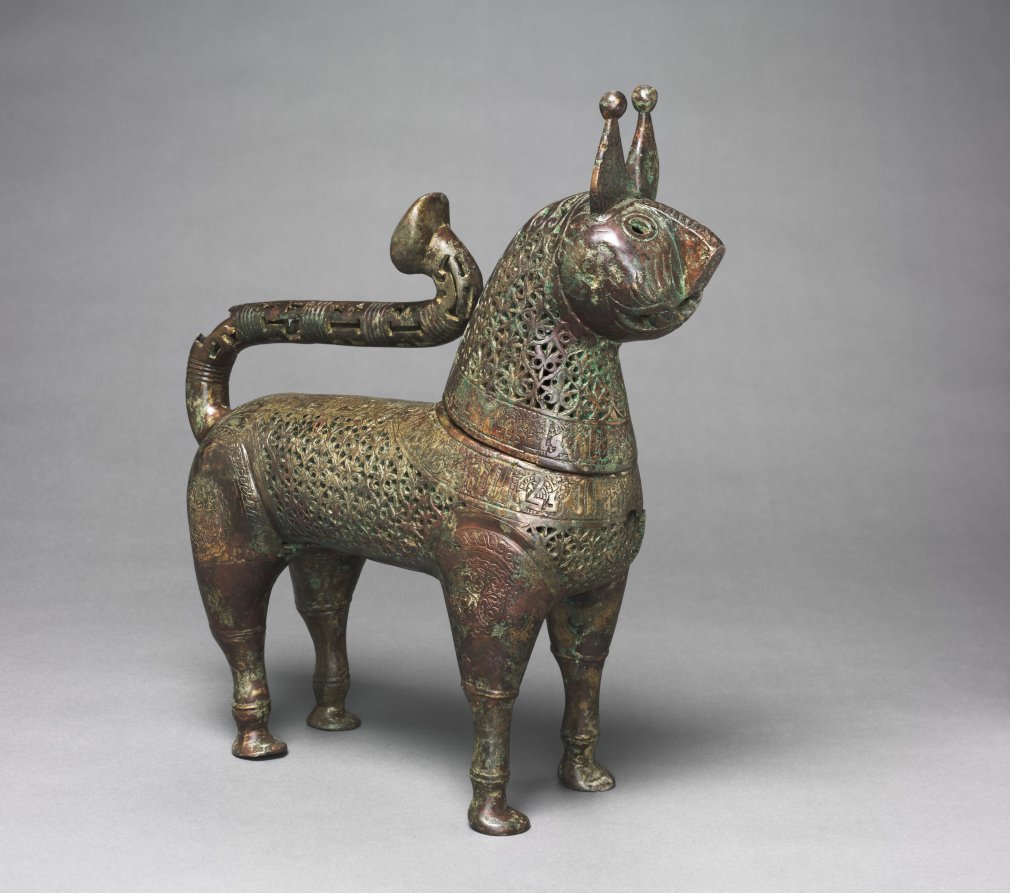
Iran, Seljuq period of Iran (1037–1194) · 1200–1221
饰拟人化文字的韦德杯
作者未记录
Purchase from the J. H. Wade Fund · 克利夫兰艺术博物馆
图像许可: CC0 · 图像使用政策 · 博物馆记录与图像来源 ↗
博物馆未记录创作者
在萨法维宫廷的环境里,能够调动昂贵织材,本身就是地毯所传达的身份。一闪而过的光让这份投入有了可见效果。
丝线与金属线反光不同。人从毯旁走过,花纹明明没动,最显眼的地方却可能换了位置。
本站观察与练习建议;历史和制作资料见下方来源。
资料依据 The Cleveland Museum of Art ↗
可对照阅读
The Safavid dynasty was the greatest dynasty from Iran in the Islamic period. Similarly, woven textiles and carpets from this period are some of the best produced in the region. Royal workshops produced luxurious textiles, like this one, to furnish the royal court. Expertly woven silks were highly prized by the Iranian elite but were also produced for export to the European aristocracy.
馆藏文字 · 克利夫兰艺术博物馆 · CC0