↗
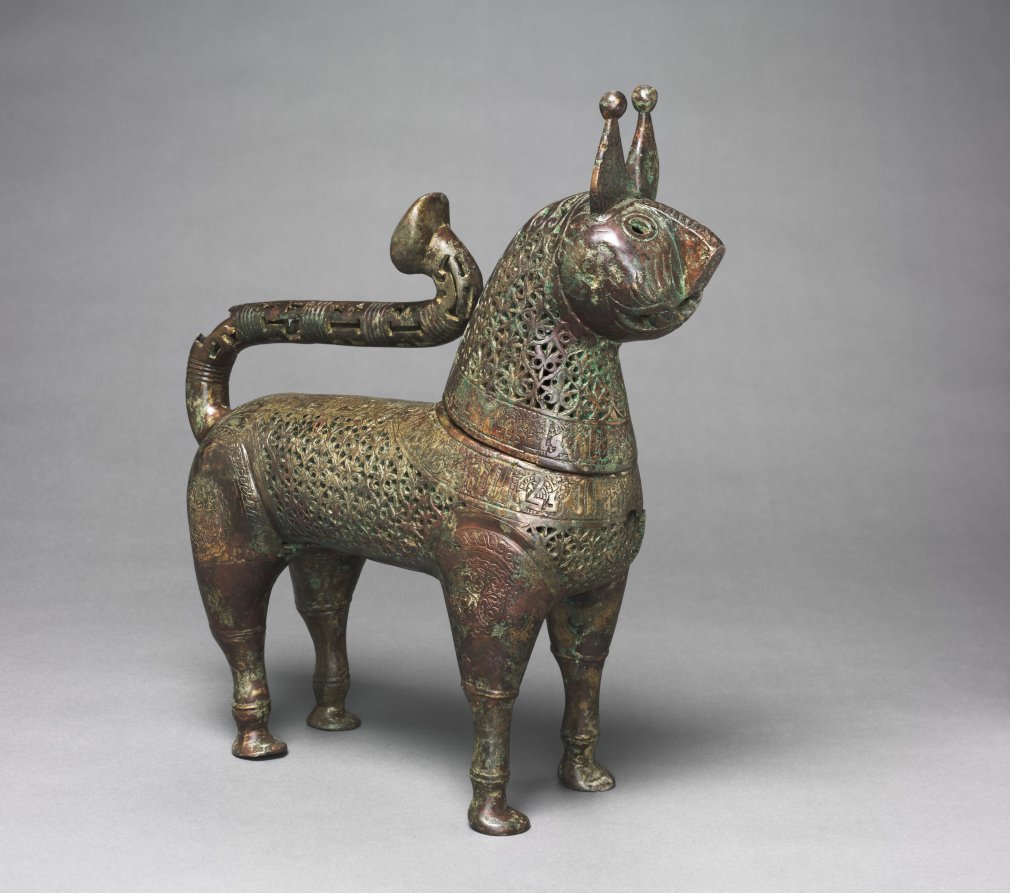
Iran, Seljuq period of Iran (1037–1194) · 1200–1221
饰拟人化文字的韦德杯
作者未记录
Worcester R. Warner Collection · 克利夫兰艺术博物馆
图像许可: CC0 · 图像使用政策 · 博物馆记录与图像来源 ↗
博物馆未记录创作者
胁侍把注意力引向阿弥陀佛,又各有姿态。只描三个轮廓,看对称的排列能容下多少差别。
本站观察与练习建议;历史和制作资料见下方来源。
资料依据 The Cleveland Museum of Art ↗
可对照阅读
This bronze triad depicts Amitabha, the Buddha of Western Paradise, at the center, flanked by two bodhisattvas: Ksitigarbha on his left and Avalokiteśvara on his right. Ksitigarbha is believed to rescue those tormented beings from purgatory, while Avalokiteśvara offers relief to those suffering in the mortal realm. An exceptionally rare statue from the 1400s, this piece entered the CMA’s collection in 1918. It was discovered in Korea in 1916 by Langdon Warner (1881–1955), who was serving as the CMA’s field agent. In a letter dated December 4, 1916, Warner expressed not only his excitement upon finding the triad in a local pawn shop but also his satisfaction at purchasing it at a significantly reduced price.
馆藏文字 · 克利夫兰艺术博物馆 · CC0