 ↗
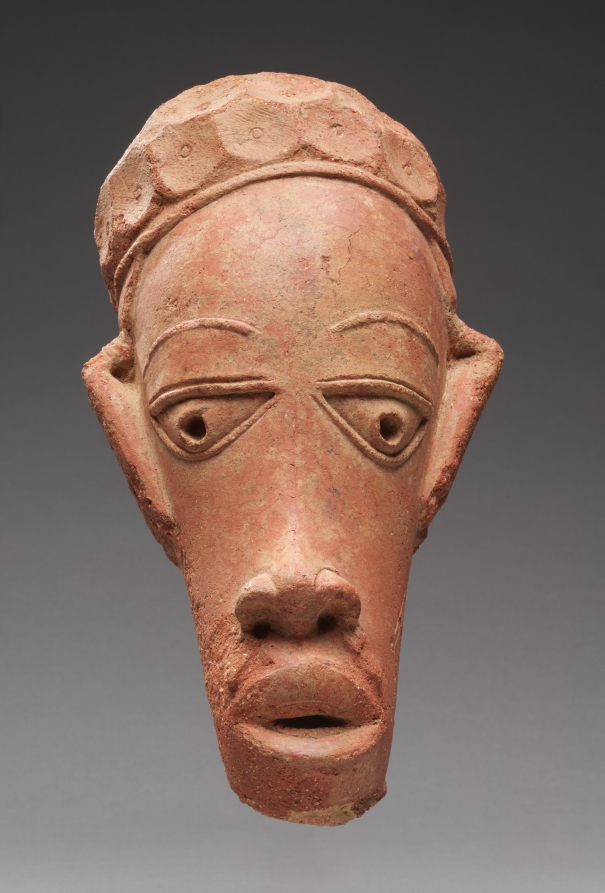
Africa, West Africa, Nigeria, Nok-culture style region, unknown female ceramicist · thermoluminescence date 20–620 CE
头像
作者未记录
Gift of Mrs. Ralph M. Coe in memory of Ralph M. Coe · 克利夫兰艺术博物馆
图像许可: CC0 · 图像使用政策 · 博物馆记录与图像来源 ↗
博物馆未记录创作者
羚羊头饰要联系表演者来看。想象它的上缘在头顶移动,再与它静置于展架上的样子比较。
本站观察与练习建议;历史和制作资料见下方来源。
资料依据 The Cleveland Museum of Art ↗
可对照阅读
Chi wara—a mythical “farming beast”—was said to teach farming to the Bamana people. Carved patterns cover this female chi wara’s body, highlighting its muscles and emphasizing that it is no earthly animal, but rather an agricultural spirit that combines human, antelope, and anteater elements. This example wears earrings and a nose ring of imported metals and beads. Its carver—a blacksmith—used a naturalistic style common south of the city of Bamako. Accompanied by women’s songs, male performers danced paired male-and-female chi wara headdresses affixed to basketry caps at agricultural competitions and weddings.
馆藏文字 · 克利夫兰艺术博物馆 · CC0↗作者未记录
 ↗
作者未记录
 ↗
作者未记录
 ↗
作者未记录