 ↗
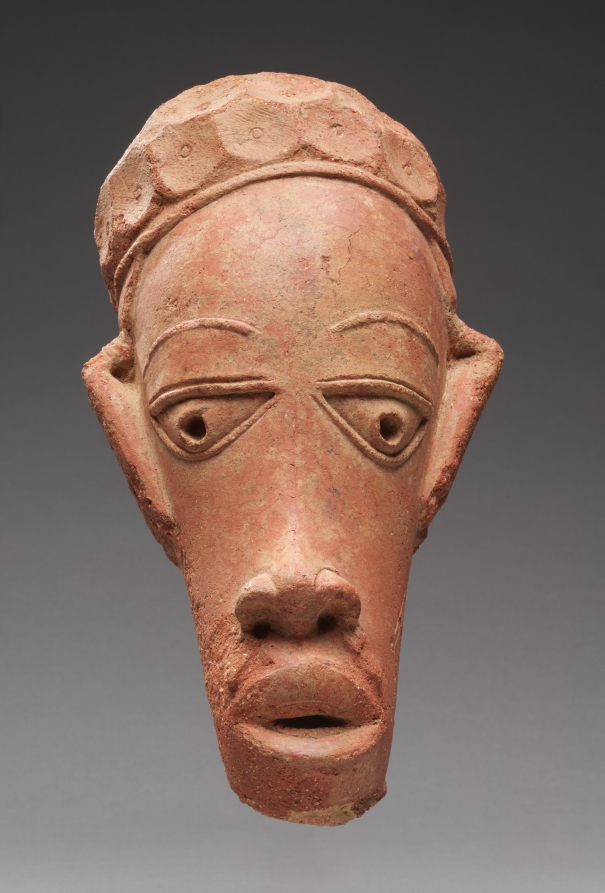
Africa, West Africa, Nigeria, Nok-culture style region, unknown female ceramicist · thermoluminescence date 20–620 CE
Head
Creator not recorded
Gift of Mrs. Ralph M. Coe in memory of Ralph M. Coe · The Cleveland Museum of Art
Image licence: CC0 · Image policy · Museum record & image source ↗
Creator not recorded by the museum
A chi wara headdress is viewed in relation to a performer. Imagine its upper contour moving above the head and compare that view with one resting on a museum support.
Site interpretation and practical exercises. Historical and technical evidence is linked below.
Sources for context The Cleveland Museum of Art ↗
Read alongside
Chi wara—a mythical “farming beast”—was said to teach farming to the Bamana people. Carved patterns cover this female chi wara’s body, highlighting its muscles and emphasizing that it is no earthly animal, but rather an agricultural spirit that combines human, antelope, and anteater elements. This example wears earrings and a nose ring of imported metals and beads. Its carver—a blacksmith—used a naturalistic style common south of the city of Bamako. Accompanied by women’s songs, male performers danced paired male-and-female chi wara headdresses affixed to basketry caps at agricultural competitions and weddings.
Collection text · The Cleveland Museum of Art · CC0↗Creator not recorded
 ↗
Creator not recorded
 ↗
Creator not recorded
 ↗
Creator not recorded