 ↗
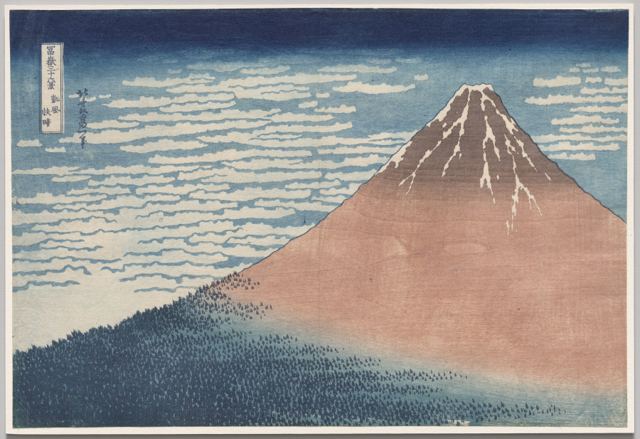
Japan, Edo period (1615–1868) · 1830年代初
凯风快晴,选自《富岳三十六景》
葛饰北斋
#93805E#9B8560#99835F#7D6E54#958260#AA946B根据博物馆图像中的六组色彩估算,包含可见纸张或边框。复制方式和光照会影响结果;这里显示的是图像面积占比,而非颜料用量。
John L. Severance Fund · 克利夫兰艺术博物馆
图像许可: CC0 · 图像使用政策 · 博物馆记录与图像来源 ↗
光琳给白梅用了留白法。花的位置其实得先想好,后来画在四周的笔墨才让它们看得见。
梅花相对于枝干很小。试着最后才点花,回头看看是哪些枝间空隙让花显出来。
本站观察与练习建议;历史和制作资料见下方来源。
资料依据 The Cleveland Museum of Art ↗
可对照阅读
Ogata Kōrin had to think through his design carefully to create these white plum blossoms and deliver their effect, as he used the reserve technique—where selected areas of the painting surface are left unpainted—to achieve it. He probably roughed in the tree before applying an ink wash to the entire silk surface, except where he intended to place the flowers. He likely then returned to articulate the petals and, in some cases, the pistils and stamens. The composition shows the tree twisting out of view, only to return with a branch of new growth jabbing forth from an old, broken limb, thereby heightening the visual impact of the blossoms.
馆藏文字 · 克利夫兰艺术博物馆 · CC0