 ↗
China, Ming dynasty (1368–1644) · 1490年之后
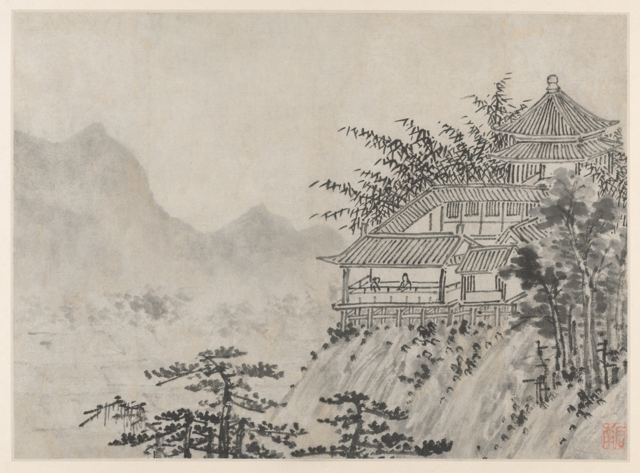
千顷云,选自《苏州虎丘十二景》
沈周
#BBAE95#B0A189#B6A990#938873#A59C83#BEBBA1根据博物馆图像中的六组色彩估算,包含可见纸张或边框。复制方式和光照会影响结果;这里显示的是图像面积占比,而非颜料用量。
Bequest of Mrs. A. Dean Perry · 克利夫兰艺术博物馆
图像许可: CC0 · 图像使用政策 · 博物馆记录与图像来源 ↗
沈周取一段花枝入画,这就是“折枝”的安排。画上不用有整棵海棠,一段枝条就得让人读出它怎样生长。
花开在伸得出纸外的枝上。只描枝条与画边相交的几处,就能试出这棵树让人觉得被截断,还是仍在画外生长。
本站观察与练习建议;历史和制作资料见下方来源。
资料依据 The Cleveland Museum of Art ↗
可对照阅读
Shen Zhou painted a broken branch (zhezhi 折枝) of crab apple, a fragment of nature rather than the full plant in its natural context. Shen uses calligraphic outlines in pure ink to depict the flower petals. The swift yet precise brushstrokes together with the slight S-shaped branch convey vitality. The inscription is a poem written by the artist, commenting on the lovely color and melancholic aura of the crab apple blossom. Shen Zhou is the founder of the Wu School, a group of scholars and officials active around Suzhou in eastern China, known for practicing painting and calligraphy in a refined and elegant style.
馆藏文字 · 克利夫兰艺术博物馆 · CC0