 ↗
China, Ming dynasty (1368–1644) · after 1490
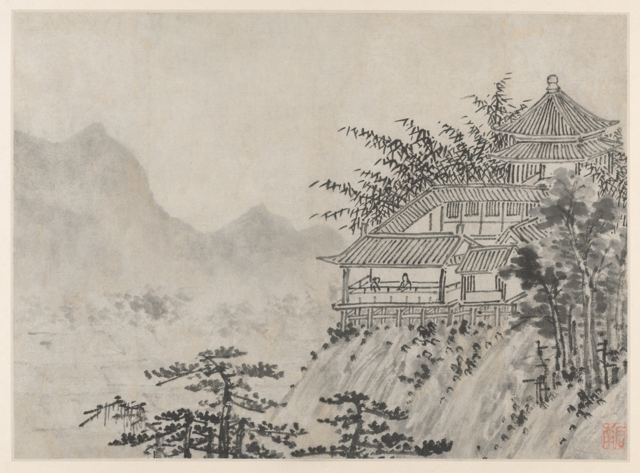
The Thousand Acres of Clouds, from Twelve Views of Tiger Hill, Suzhou
Shen Zhou
#BBAE95#B0A189#B6A990#938873#A59C83#BEBBA1Estimated from six colour groups in the museum image, including visible paper or borders. Reproduction and lighting affect the result; these are image-area proportions, not pigment measurements.
Bequest of Mrs. A. Dean Perry · The Cleveland Museum of Art
Image licence: CC0 · Image policy · Museum record & image source ↗
Shen Zhou selected a broken flowering branch rather than a whole tree. This is the principle of zhezhi, or cut-branch composition: the fragment has to carry the character of the plant.
The blossom lives on a branch that can extend beyond the sheet. Draw just the places where branch and frame meet to test whether the tree feels cut short or continuous.
Site interpretation and practical exercises. Historical and technical evidence is linked below.
Sources for context The Cleveland Museum of Art ↗
Read alongside
Shen Zhou painted a broken branch (zhezhi 折枝) of crab apple, a fragment of nature rather than the full plant in its natural context. Shen uses calligraphic outlines in pure ink to depict the flower petals. The swift yet precise brushstrokes together with the slight S-shaped branch convey vitality. The inscription is a poem written by the artist, commenting on the lovely color and melancholic aura of the crab apple blossom. Shen Zhou is the founder of the Wu School, a group of scholars and officials active around Suzhou in eastern China, known for practicing painting and calligraphy in a refined and elegant style.
Collection text · The Cleveland Museum of Art · CC0↗Shen Zhou
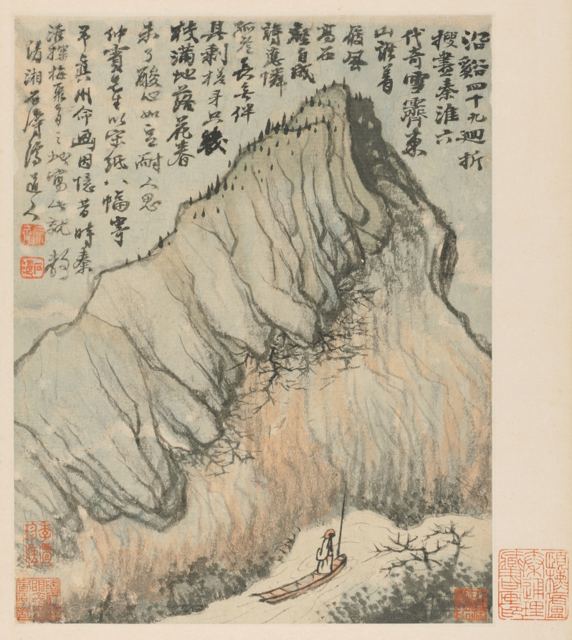 ↗
Shitao
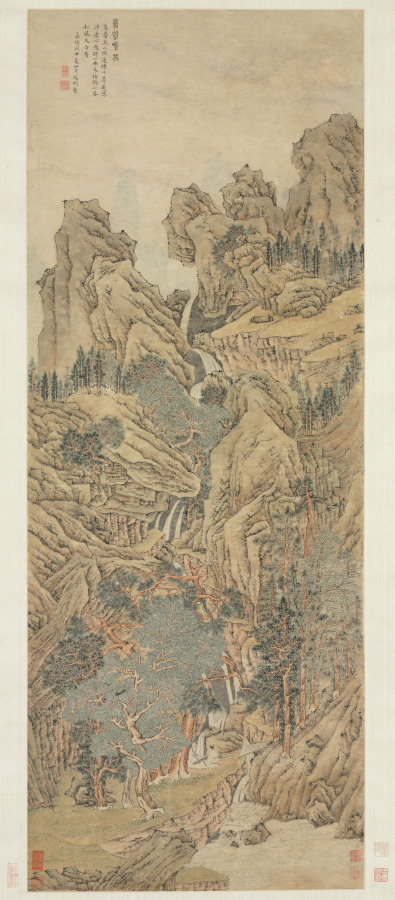 ↗
Wen Zhengming
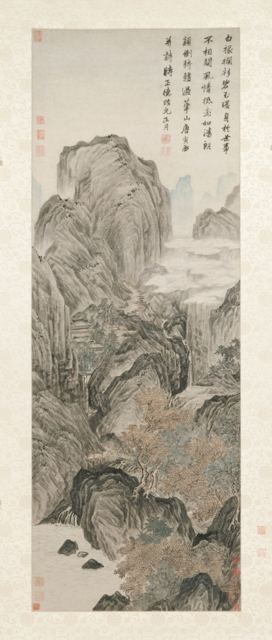 ↗
Tang Yin