↗
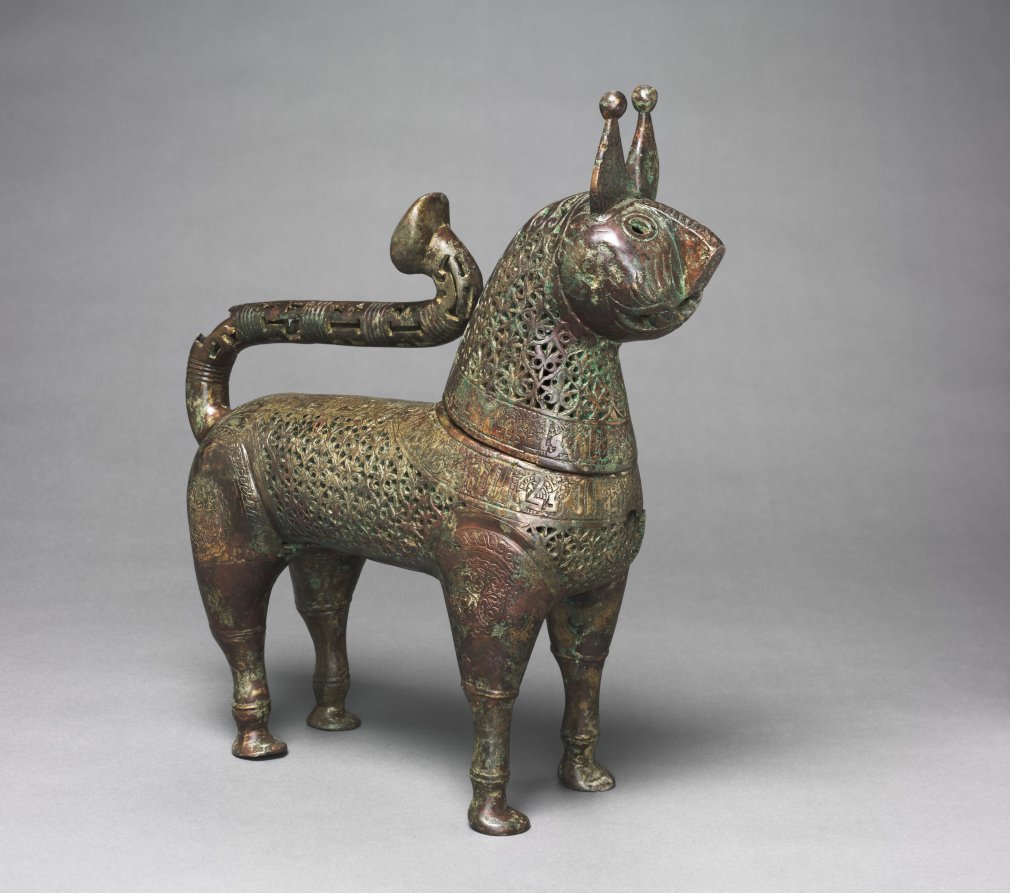
Iran, Seljuq period of Iran (1037–1194) · 1200–1221
饰拟人化文字的韦德杯
作者未记录
René and Odette Delenne Collection, Leonard C. Hanna Jr. Fund · 克利夫兰艺术博物馆
图像许可: CC0 · 图像使用政策 · 博物馆记录与图像来源 ↗
博物馆未记录创作者
nkishi 比“男性人物”多带了一层当地知识。读身体造型时对照记录的用途;单靠轮廓无法判断仪式含义。
本站观察与练习建议;历史和制作资料见下方来源。
资料依据 The Cleveland Museum of Art ↗
可对照阅读
This figure's visual impact and workmanship suggest that an extended family––rather than an individual––used it. The raffia skirt around the waist and the blue and white beads are indicators of leadership. The metal appliqué covering the face and the metal blades that hedge the headgear refer to the blacksmith, a culture hero celebrated in a Songye myth narrating the formation of the state. The metal strips on the skeletal face are said to relate to lightning, signaling the figure's role as a powerful anti-sorcerer, but the contrast between white iron and red copper symbolically alludes to the ambivalent powers of the figure.
馆藏文字 · 克利夫兰艺术博物馆 · CC0