 ↗
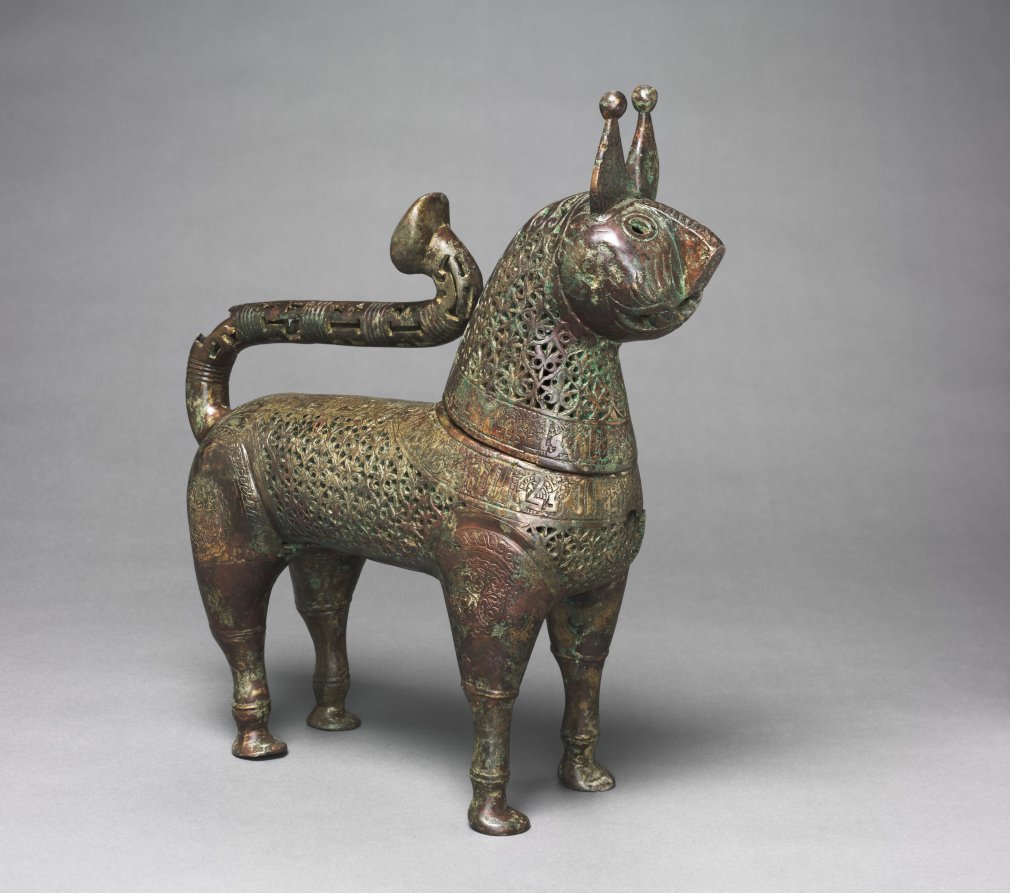
Iran, Seljuq period of Iran (1037–1194) · 1200–1221
The Wade Cup with Animated Script
Creator not recorded
René and Odette Delenne Collection, Leonard C. Hanna Jr. Fund · The Cleveland Museum of Art
Image licence: CC0 · Image policy · Museum record & image source ↗
Creator not recorded by the museum
The term nkishi gives more information than male figure alone. Keep the documented use beside your description of the body's form; a silhouette cannot settle ritual meaning.
Site interpretation and practical exercises. Historical and technical evidence is linked below.
Sources for context The Cleveland Museum of Art ↗
Read alongside
This figure's visual impact and workmanship suggest that an extended family––rather than an individual––used it. The raffia skirt around the waist and the blue and white beads are indicators of leadership. The metal appliqué covering the face and the metal blades that hedge the headgear refer to the blacksmith, a culture hero celebrated in a Songye myth narrating the formation of the state. The metal strips on the skeletal face are said to relate to lightning, signaling the figure's role as a powerful anti-sorcerer, but the contrast between white iron and red copper symbolically alludes to the ambivalent powers of the figure.
Collection text · The Cleveland Museum of Art · CC0↗Creator not recorded
 ↗
Creator not recorded
 ↗
Creator not recorded
 ↗
Creator not recorded