 ↗
Iran, Tabriz, Ilkhanid period (1256-1353) · 1330–35
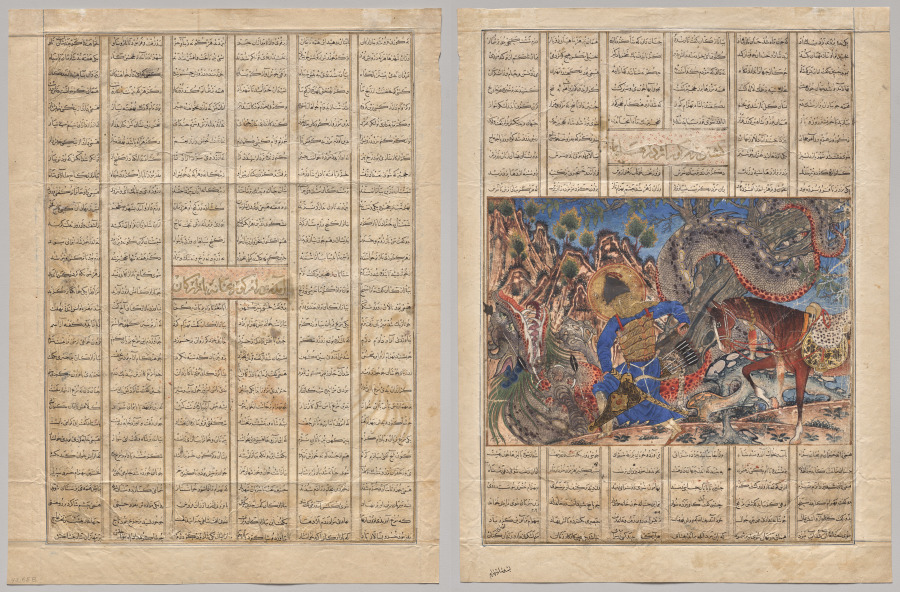
巴赫拉姆·古尔到商人家中(正面文字页);巴赫拉姆·古尔屠龙(背面)——《列王纪》册页
作者未记录
#7F6C5B#B0A28E#9C8A77#D8D0C4#DDD6CA#C7BAA3根据博物馆图像中的六组色彩估算,包含可见纸张或边框。复制方式和光照会影响结果;这里显示的是图像面积占比,而非颜料用量。
John L. Severance Fund · 克利夫兰艺术博物馆
图像许可: CC0 · 图像使用政策 · 博物馆记录与图像来源 ↗
博物馆未记录创作者
葬仪肖像有鲜活的目光,又承担纪念用途。先从正面描述这场相遇,再把它放回安葬的环境想一遍。
本站观察与练习建议;历史和制作资料见下方来源。
资料依据 The Cleveland Museum of Art ↗
可对照阅读
Transforming the spirit—not beautifying the mortal body—may have been the purpose of adding golden lips and jewelry to this painting. Egyptian-style burial customs and arts persisted throughout Greek, Roman, and Byzantine rule over Egypt (305 BCE–641 CE). The woman depicted in this panel lived between cultures. Her or her family’s choice of mummification reflected historical Egyptian practices of creating a physical “duplicate” for the deceased’s soul to rest in, and their decision to color her lips gold here may symbolize how death transformed her into an akh (effective spirit). In contrast, the choice of her clothing and hairstyle showed her embrace of contemporary ideals of Hellenic (Greco-Roman) Egyptian identity.
馆藏文字 · 克利夫兰艺术博物馆 · CC0↗作者未记录
 ↗
作者未记录
 ↗
作者未记录
 ↗
作者未记录