↗
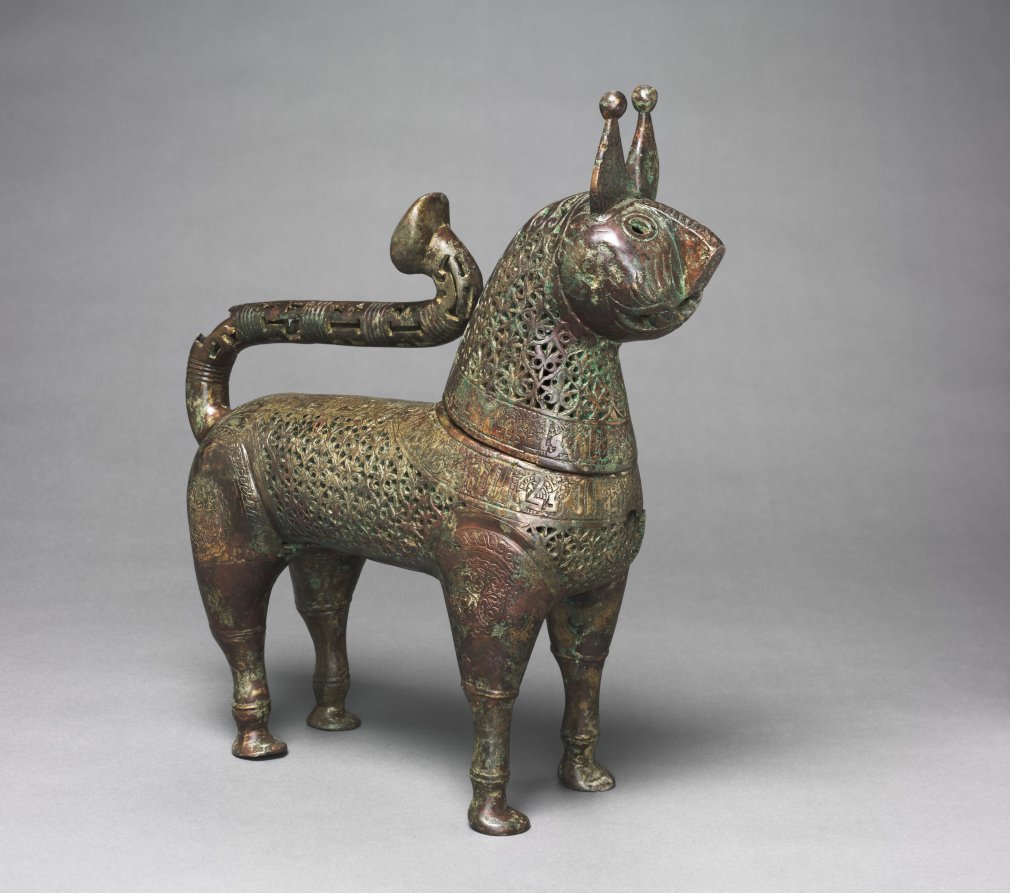
Iran, Seljuq period of Iran (1037–1194) · 1200–1221
饰拟人化文字的韦德杯
作者未记录
Gift of Mr. and Mrs. Robert M. Hornung · 克利夫兰艺术博物馆
图像许可: CC0 · 图像使用政策 · 博物馆记录与图像来源 ↗
博物馆未记录创作者
把砝码规整的几何外形和磨软的边缘放在一起看:精确属于称量的用途,磨损属于拿过它的双手。
本站观察与练习建议;历史和制作资料见下方来源。
资料依据 The Cleveland Museum of Art ↗
可对照阅读
The Asante kingdom (an Akan state in present-day Ghana) primarily derived its wealth and power from its massive gold resources. Since at least 1600, small weights in brass and bronze were used to weigh gold dust and nuggets, which were the local form of currency. The rounded, worn-down edges of this weight suggest that it was used frequently. The royal court had the most elaborate store of weights, while commoners often had about a dozen. Their imagery falls into two broad categories: geometric and representational. The latter often refers to proverbs, which used judiciously, marked a wise person.
馆藏文字 · 克利夫兰艺术博物馆 · CC0这件小小的铜合金砝码原本用来称金子。照片里规整的几何形很抓眼,但磨圆的边角还留下了人反复拿取的痕迹。试着画两次:一次画得棱角分明,一次照现在的样子画。单靠几个转角,能让人看出多少使用的历史?
本站解读 · 目录事实与画面观察
核对博物馆记录 ↗